 Queenstown City Guide
The Shotover Gold Rush: 1862, and What Is Left
The Shotover River gold rush lasted a few frantic years, remade this valley completely, and is the reason a town of sheep runs became a town of tour desks. It began in 1862, two years after the first European farmer put stock on the flat where Queenstown now stands, and within months the river held thousands of men who had walked in from the coast with a shovel. This is the history behind the jet boats and the bungy bridge: who actually found the gold, where the famous line about the richest river in the world really comes from, what happened to the Chinese miners the province invited and then despised, and what you can still walk to. Sources are named throughout, and the claims nobody can support are printed as claims. If you are planning the trip rather than reading the history, see what to do in Queenstown for the practical layer. Prices here are US dollars first with New Zealand dollars in brackets, at NZ$1 = $0.584.
Quick answer Who found it, when, and what survives that you can visit
Gold was found in this valley in 1862: Jack Tewa on the Arrow River first, his find kept quiet, then John McGregor and Thomas Low on the same river, and Thomas Arthur and Henry Redfern on the Shotover. By the end of that October about 1,500 men were camped along the Arrow, and William Rees, who had farmed the site of Queenstown since 1860, was paid £10,000 to leave land that had become a goldfield. What survives is a museum, a restored Chinese settlement and two rivers you can still legally pan.
Key takeaways
- The best hour of gold-rush history is $8.18 (NZ$14) at the Lakes District Museum in Arrowtown, which occupies the town's original Bank of New Zealand building
- The Chinese settlement on Bush Creek is a Department of Conservation heritage site with interpretation in English and Chinese, and DOC publishes no admission charge for it
- The road into the richest workings is Skippers Canyon, where the 1901 bridge has been closed to vehicles, cyclists and pedestrians alike since the council's inspection, and the only sane way in is a half-day 4WD trip
- You can still pan: a lesson with a guaranteed find is $20.40 (NZ$35), or hire a pan for NZ$5 and take your chances in the river, five minutes' walk away
How It Started: Two Years From Sheep to Goldfield
In 1860 William Rees and Nicholas von Tunzelmann crossed the Crown Range from the Cardrona side and found the pastoral country they had been looking for. Rees built a homestead facing Queenstown Bay and had, in the Lakes District Museum's phrase, two years of peaceful settlement.
The Otago rush had already begun further east: gold at Gabriel's Gully in 1861 pulled thousands into the province. In 1862 it arrived here. The museum's own timeline gives the sequence carefully, and the order matters. Jack Tewa found gold in the Arrow River first and his find was not publicised. John McGregor and Thomas Low then found gold in the same river, and William Fox arrived around the same time, which is why Arrowtown was first known simply as Fox's. Thomas Arthur and Henry Redfern found gold in the Shotover. That is the point at which the Whakatipu rush begins.
What happened to Rees is the whole story in one line: his property was declared a goldfield, a canvas and shanty town went up on his doorstep, and he was paid £10,000 to vacate. Von Tunzelmann, across the lake, lost stock and money and was eventually forced off the land as well. The farm lasted two years. The rush that replaced it lasted a few more, and the tourism that replaced that has now run for over a century.
What arriving actually meant
Miners landed at Port Chalmers in Dunedin and travelled inland on foot and by cart to a district with no road, no bank and almost no food. The museum reproduces two contemporary accounts that make the point better than any summary.
The first is from Alfred H. Duncan's The Wakatipians, published in 1888: a man burst into a hut, seized the lump of dough that was being kneaded and ate it, then explained that he had been five days without food. The second is Vincent Pyke, in Early Gold Discoveries in Otago, 1887, on supply: because the district was so difficult to reach, provisions were scarce and dear, and he often had two to four hundred men waiting for his whaleboat to come up from Kingston to get a few pounds of flour each, some so hungry they boiled the flour in billies rather than wait for bread to bake.
By the end of October 1862, about 1,500 miners were camped along the Arrow River alone.
The Shotover Rush in Ten Dates
Every line here is from the Lakes District Museum's own published timeline of the district, except the two marked otherwise, which come from the Department of Conservation and the district council.
-
1860
The farm
William Rees and Nicholas von Tunzelmann cross the Crown Range and identify the pastoral land; Rees establishes a homestead on the site of present-day Queenstown.
-
1861
The Otago rush begins
Gold is found at Gabriel's Gully. Rees's first flock of sheep arrives in Queenstown in the same year.
-
1862
Gold in the Arrow and the Shotover
Jack Tewa finds gold in the Arrow River and the find is not publicised; McGregor and Low find gold in the same river; Thomas Arthur and Henry Redfern find gold in the Shotover. About 1,500 miners are camped on the Arrow by the end of October.
-
1863
Flood, and the gold escort
Floods devastate Arrowtown and the Shotover with heavy loss of life; Arrowtown's first school opens the same year. Cobb and Co take on the escort carrying gold to Dunedin, accompanied by armed police.
-
1866
The Chinese miners arrive
Chinese miners begin working the Whakatipu goldfields after the Otago Provincial Government invites them, following the exodus of European miners to the West Coast.
-
1874
3,564
The census counts 3,564 Chinese in Otago, against fewer than 200 eight years earlier, most of them on the goldfields (Department of Conservation).
-
1875
The gaol
Arrowtown's historic jail is completed, one of the buildings still standing on the town's main street.
-
1880
A bridge for the goldfields road
The Kawarau Suspension Bridge is built by the engineer Harry Higginson, who takes a Telford Premium for it two years later (Department of Conservation).
-
1901
Skippers Bridge
The suspension bridge into the Shotover's upper workings opens. It is closed to all vehicles, cyclists and pedestrians after a council inspection finds failures in its suspension cable wires, with no reopening date.
-
1965
The river changes hands
Shotover Jet begins commercial jet boating at Arthurs Point, on the water that made the district's name a hundred years earlier.
The museum's timeline runs from the formation of the schist that holds the gold to the present day; the ten lines above are the ones that shaped this valley in particular.
The Richest River in the World: a Claim, Not a Measurement
Every operator page and every listicle about this valley repeats some version of the same sentence: that the Shotover was the richest gold-bearing river in the world, or the second richest after the Klondike. It is worth taking that claim apart, because it is the most repeated line in Queenstown and it is not what it appears to be.
The phrase does exist in the record. The Lakes District Museum reproduces a miner's letter home, written to persuade friends to come out, and the words are: "Dear Jack, I am making my pile fast. 100 pounds a week. This is the richest river in the world. I walk up to my waist in water, put down the shovel and sometimes bring up 5 or 6 ounces."
Two things follow. First, this is a recruitment letter, not a survey: a man telling his friends he is making a hundred pounds a week, in a district where flour was being rationed off a whaleboat. Second, and this is the part nobody mentions, the museum prints it in its material about the Arrow River, not the Shotover.
We looked for an authority that attributes the phrase to the Shotover, or that publishes a total for how much gold came out of it, and we could not find one on a museum, council or government page. Te Ara and NZHistory, the two government sources most likely to hold such a figure, both refused automated reading when we tried, which is a limitation of our method rather than evidence of absence; but nothing we could read supports the ranking. So the honest version, and the one this site prints, is that the Shotover was extraordinarily rich, that the phrase comes from a contemporary letter about a neighbouring river, and that the league table is folklore.
The Chinese Settlement: Invited, Then Resented
In 1865 gold was found on the West Coast and the European miners left almost overnight, taking the Otago economy with them. The provincial government's response was to invite Chinese miners to work the fields the Europeans had abandoned. They came first from the Australian goldfields and then directly from Guangzhou province, where poverty, overcrowding and the aftermath of the Opium Wars had made emigration a family strategy rather than an adventure.
The numbers moved fast. The Department of Conservation records fewer than 200 Chinese miners in Otago in 1866 and 3,564 by the 1874 census, most of them on the goldfields and most living on the fringes of the European settlements. By 1885 the Arrowtown settlement on Bush Creek had about ten huts, a large social hall and at least two stores, plus extensive gardens, built from mud brick, mortared stone, wood, corrugated iron and canvas. The hall, perhaps fifteen metres long, disappeared around 1900.
The hostility is on the record too, and the museum reproduces it rather than tidying it away. A Tuapeka Times item of 11 March 1885 describes Arrowtown as having been for a week "the centre of attraction for about 200 Chinese" and then works itself into several sentences of open racial contempt that are unpleasant to read and were entirely ordinary in the period press. In the same collection sits a settler arguing the opposite case, that the towns of Otago were struggling and Chinese immigration should be supported. Both were written by people who thought of themselves as reasonable.
The settlement was excavated by the Department of Conservation in 1983. Two of the buildings are original and the rest were reconstructed from photographs using the same materials. Ah Lum's store, the best surviving structure, sits on a terrace about a hundred metres down the hill; Su Sing's store is marked only by four corner posts. Interpretation panels are in English and Chinese, and the main dray track through the centre of the site is suitable for wheelchairs and buggies, though the side tracks are not.
One wording note we hold ourselves to: DOC never calls the settlement free. It publishes no admission charge and describes it as a site to visit at your leisure, which is not quite the same sentence. The settlement sits a short drive from Queenstown, and guided tours in Queenstown that include Arrowtown are an easy way to reach the huts without driving yourself.
Touching the Gold Rush Today, and What Each Part Costs
Prices read on the museum's and the operators' own pages in Q3 2026, with the heritage detail from the Department of Conservation. The museum figures are its published rates; the tour price is the platform's own listing.
| What | Where | Price | What you actually get |
|---|---|---|---|
| Lakes District Museum | 49 Buckingham Street, Arrowtown, 09:00 to 17:00 daily | $8.18 (NZ$14) adult, $17.52 (NZ$30) family | The district's own archive, in the original Bank of New Zealand building, with a lift to the lower level |
| Gold panning lesson | From the museum, December to February, 10:00 to 15:00 | $20.40 (NZ$35) adult, $57.80 (NZ$99) family | Twenty minutes of instruction, museum entry included, and a guaranteed find to take home |
| Pan and trowel hire | Museum shop, year-round, last hire an hour before closing | NZ$5, bond held | The river is a five-minute walk; no instruction and no guarantee |
| Chinese Settlement | Top of Buckingham Street, on Bush Creek | No charge published by DOC | Ten huts' worth of settlement, two buildings original, panels in English and Chinese |
| Kawarau Suspension Bridge | 23 km east on State Highway 6 | Free to visit | The 1880 goldfields bridge, now a heritage site and a bungy platform |
| Skippers Canyon by 4WD | Half-day tour from Queenstown | $177.94 listed | The road into the upper workings, driven by someone who does it daily |
The cheapest of these is the one most visitors skip. The Chinese Settlement takes half an hour, costs nothing that anyone publishes, and is the only place in the district where the housing of the people who actually worked the fields is still standing rather than reconstructed as a shopfront.
What Is Left to See, and What Has Been Closed
Arrowtown is the obvious survivor: a single historic street of miners' cottages and stone shopfronts, the 1875 gaol, and the museum in the old bank. It is twenty minutes from Queenstown and two Orbus routes reach it, which makes it the cheapest history in the district. The Arrowtown page covers the practical visit.
The Shotover itself is harder to reach than the Arrow. The richest workings were upriver in Skippers Canyon, and the road in is the one built for the miners: narrow, unsealed, cut into the schist. The bridge that every photograph of the canyon shows opened in 1901, and the district council closed it to all vehicles, cyclists and pedestrians after an inspection found failures in the wires of the cables that suspend it. There is no reopening date because the bridge's future has to go through the council's annual planning process. Operators still run the canyon, and the half-day 4WD tour is the usual way in; the photo stop is the thing that has gone. That is set out in full on the Skippers Canyon page, and it is the single most out-of-date fact on the rest of the internet about this valley.
Downstream, the continuity is almost comic. The Kawarau Suspension Bridge was built in 1880 to carry the goldfields road across the gorge; traffic moved to a new bridge in 1963, the old one was preserved, and in 1988 it became the first commercial bungy site in the world. DOC lists it as a heritage site and calls it the birthplace of bungy tourism, which means the same structure appears in this valley's story twice, a century apart, for two entirely different reasons. The Kawarau bungy page has the modern half.
And on the Shotover, in 1965, jet boats started running commercially at Arthurs Point. The river that made the district's name for a decade has been making it money ever since, in a completely different way. The Shotover Jet page covers what that ride is now.
Ways Into the Goldfields Country
Three trips that reach the ground this history happened on: the canyon road above the Shotover, the ride down the river itself, and the trail back from Arrowtown that follows the old workings along the Arrow. Prices are the platform's own listings and are confirmed at checkout.
 from $177.94
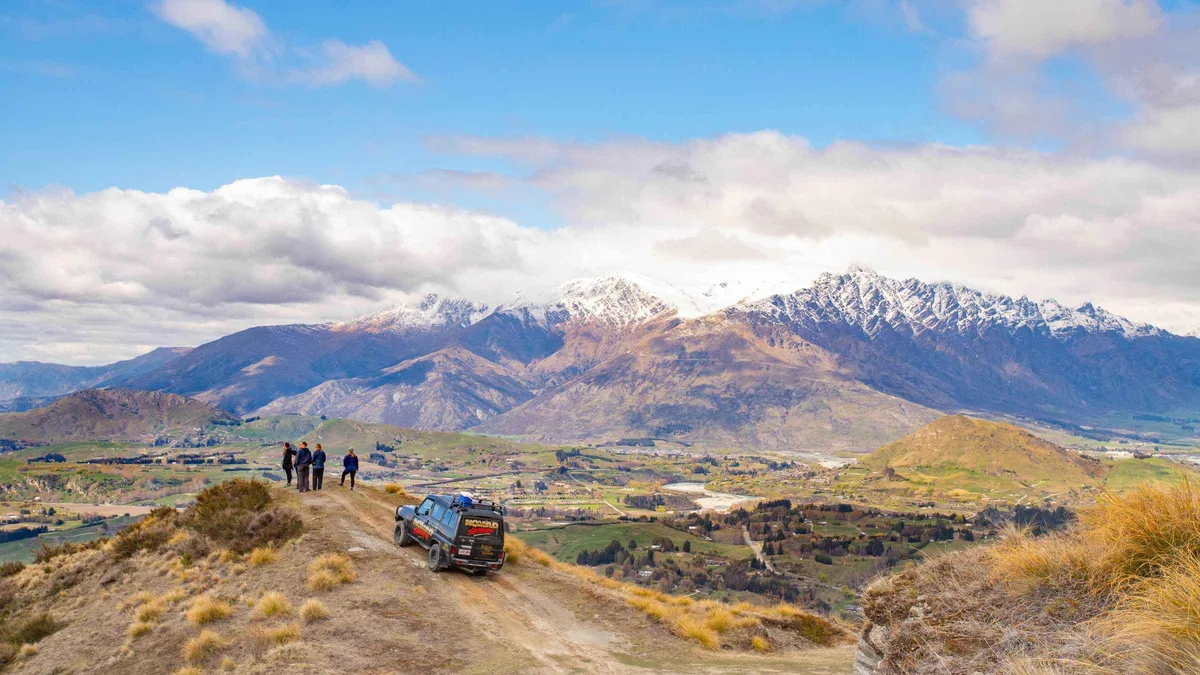
Queenstown: 4WD Lord Of the Rings Half-Day Tour - Queenstown
The off-road one: a six-seat 4WD up Skippers Canyon Road to Lighthouse Rock, then a gold-mining track near Arrowtown with panning in the river. Four hours, and it follows Skippers rather than the Glenorchy Road.
Check Availability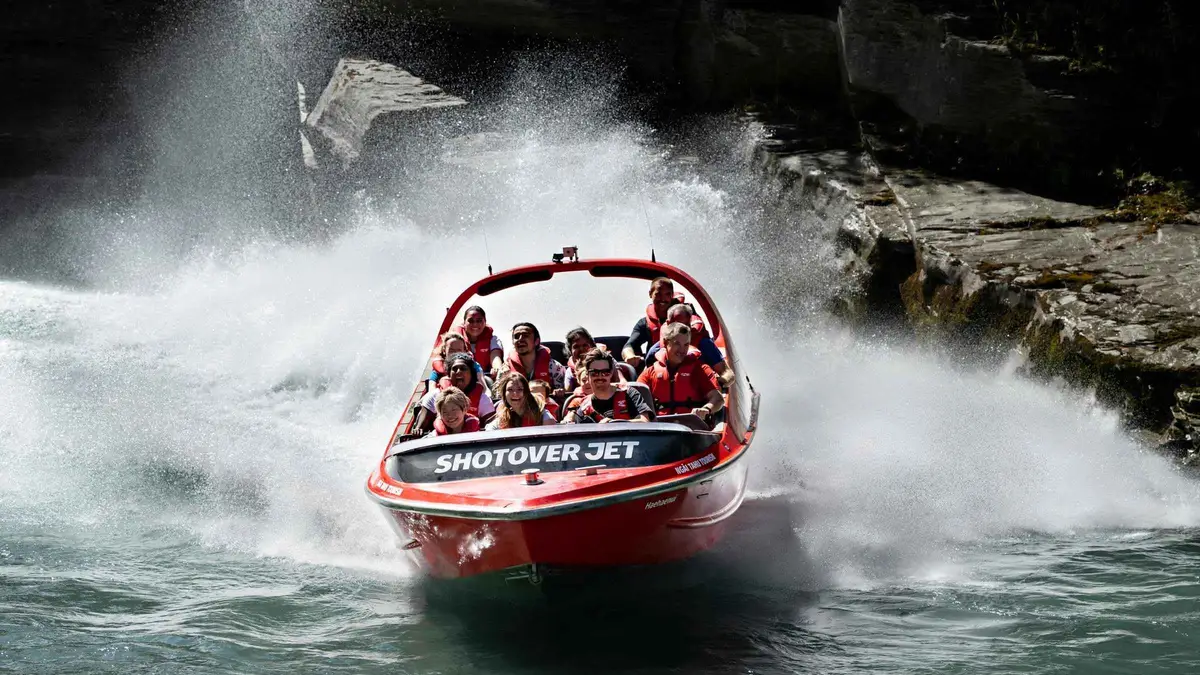 from $116.48
Queenstown: Shotover River Extreme Jet Boat Experience
Twenty-five minutes inside the Shotover Canyons, which no other jet boat operator is permitted to enter: 90kmh between rock walls, with the 360-degree spins the ride is known for. Handrails are heated in winter.
Check Availability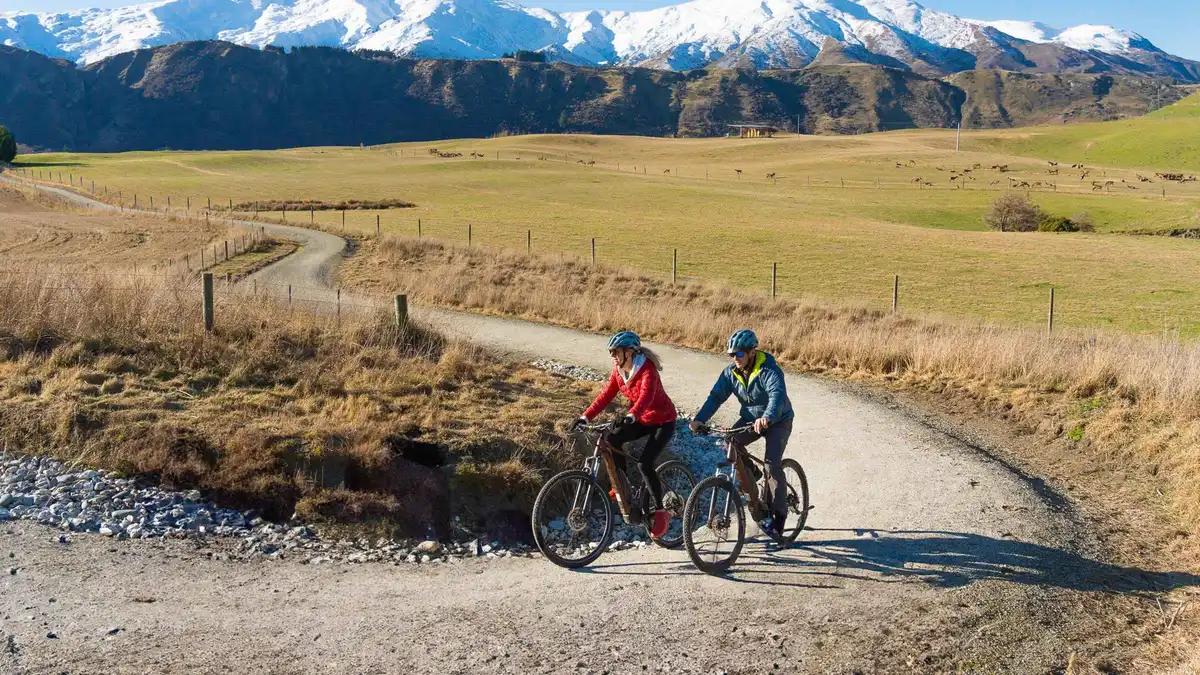 from $61.46
Queenstown: Arrowtown To Queenstown Biking Adventure
A one-way ride: the shuttle carries you and the bike out, then you pedal the 35 kilometres back along the rivers and lake edge into town. Five hours at an easy pace, standard bike or e-bike, ridden unguided.
Check AvailabilityPrices, ratings and details are the platform's own. Dollar figures are the listed prices. The platform bills in your account's currency.
The Shotover Gold Rush: the Questions People Actually Ask
Was the Shotover really the richest river in the world?
Nobody with authority says so. The phrase comes from a miner's letter home reproduced by the Lakes District Museum, written to persuade friends to emigrate, and the museum prints it in its material on the Arrow River rather than the Shotover. We found no museum, council or government page that ranks the Shotover against other rivers or publishes a total for its output. It was extremely rich; the league table is folklore.
Who found gold in the Shotover first?
Thomas Arthur and Henry Redfern, in 1862, according to the Lakes District Museum's own timeline of the district. The same year, and on the neighbouring Arrow River, Jack Tewa made a find that was not publicised, and John McGregor and Thomas Low made one that was. Other origin stories circulate for the Shotover; we print the one an institution publishes.
Can you still pan for gold near Queenstown?
Yes. The Lakes District Museum runs a twenty-minute panning lesson in summer at $20.40 (NZ$35) for an adult, which includes museum entry and a guaranteed find, or hires you a pan and trowel year-round for NZ$5 against a bond, with the river a five-minute walk away and no guarantee of anything at all.
What happened to the Chinese miners who came here?
They were invited by the Otago Provincial Government in the mid-1860s to replace European miners who had left for the West Coast, and they arrived from the Australian fields and directly from Guangzhou. Fewer than 200 were in Otago in 1866; the 1874 census counted 3,564. They lived on the edges of European settlements, faced open hostility in the local press, and their Arrowtown settlement on Bush Creek was excavated in 1983 and partly reconstructed.
Can you still cross the 1901 bridge into the canyon?
Not at present. The council closed the 1901 bridge to all vehicles, cyclists and pedestrians after an inspection found failures in the wires of its suspension cables, and no reopening date exists because the decision runs through the annual planning process. Tours still enter the canyon; the bridge itself, which is the photograph on almost every page selling the trip, cannot be crossed or walked on.
How long does the gold-rush history take to see?
Half a day covers it properly: an hour in the museum, half an hour at the Chinese Settlement, and the rest of the time on Buckingham Street and the river path. Add a full day if you want the canyon as well, because the road in is slow and is the reason the tours run four hours or more.
The Goldfields on Film
Three films that cover the ground: the old town the rush built, what is left of it today, and the road into the canyon where the richest claims were worked.
Arrowtown New Zealand: Exploring an Old Gold Town
Buckingham Street, the cottages and the river, which is the walkable half of this history.
Video: TravelKiwiArrowtown New Zealand: There's More to It Than You Think
A closer look at the town beyond the shopfronts, including the walk up Bush Creek towards the Chinese settlement.
Video: SanGee AdventuresSkippers Canyon Is New Zealand's Most Dangerous Road
The road the miners built into the upper Shotover, filmed by a New Zealand news outlet, and the reason almost nobody drives it themselves.
Video: Re: NewsVideos load from YouTube only when you press play.