 Queenstown City Guide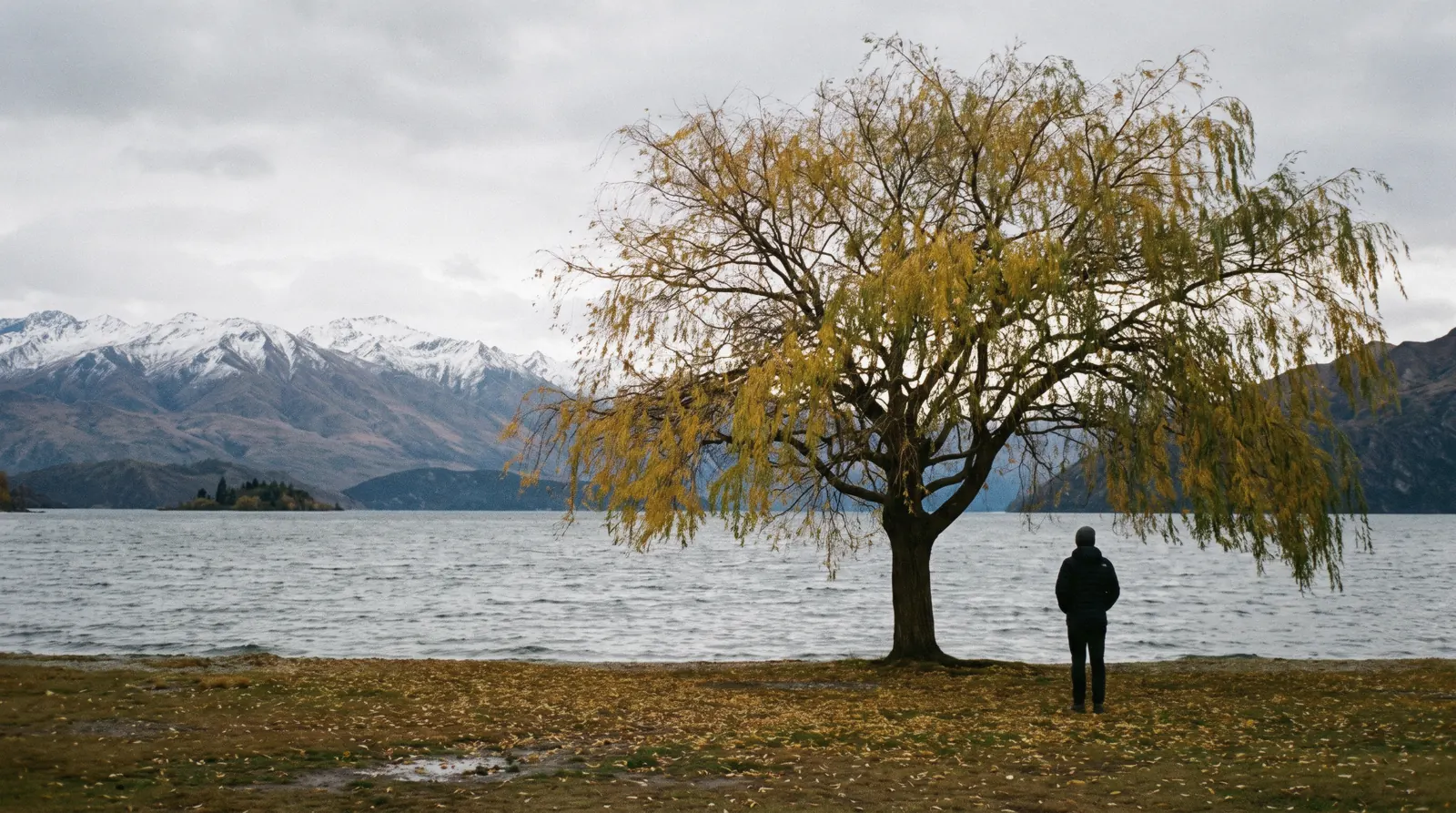
The Best Time to Visit Queenstown, Sorted by What You Came For
The best time to visit Queenstown is set by four calendars rather than one, and only one of them is a thermometer: ski seasons that open weeks apart, a Great Walk season running 1 November to 30 April, an avalanche programme on the Milford road from June to October, and thirty years of climate averages in which no month falls below 93 mm of rain. A skier, a tramper, a fiord day-tripper and someone who came for pinot noir want four different months. This page puts the season dates beside the climate averages and says which month we would pick for each. The monthly numbers themselves live on the Queenstown weather page, and the rest of the trip starts with things to do in Queenstown.
Quick answer Which month, by what you came here to do
For everything except skiing, late February to mid-April is the answer: average daily highs fall from 19.5°C to 13.7°C, the summer holiday crowd has gone home, the Milford road has no avalanche programme running and the autumn colour arrives in Arrowtown at the end of it. If you came to ski, the calendar is a different one entirely, set by four mountains that open weeks apart, and in 2026 it ran from 29 May at Coronet Peak to 18 October at Cardrona.
Key takeaways
- Autumn is the quiet half of the good weather. February and March average 19.5°C and 17.2°C, and a half-day through the Gibbston wineries runs straight through the harvest.
- There is no single ski date. Four fields open weeks apart and each publishes its own targets, so a June trip can find one mountain running and three shut.
- September and October are the two wettest months of the year here, at 141 mm and 138 mm; the full monthly rainfall series shows why spring is not the safe bet a northern visitor expects.
- Weather cancels activities, not whole days. Skydiving is rebooked or refunded in full, which is why the operator itself says to jump on your first morning and keep a spare day.
Queenstown Month by Month
Average daily high temperature by month in Celsius, with the Fahrenheit reading underneath, computed from the Open-Meteo ERA5 reanalysis for the Queenstown grid point at 45.03 S, 168.68 E over the thirty years from 1995 to 2024.
The bands under the bars are season dates from the operators and the Department of Conservation, except the crowd band, which is our own reading and is labelled as such. July is the coldest month on the thirty-year mean, 4.4°C by day and 0.0°C at night, and it is also one of the two driest at 93 mm. That is the thing most visitors have backwards: Queenstown's winter is not its wet season. The scale starts at 0°C so July still draws a visible bar.
What Each Month Trades
Twelve months set against the three things that move a Queenstown trip: how busy and dear it is, what is open or shut, and who should book it. Temperatures are ERA5 thirty-year averages, 1995 to 2024; season dates come from the operators and the Department of Conservation.
| Month | Crowds and prices | Open or shut | Book it if |
|---|---|---|---|
| January, high 19.6°C | Peak; New Zealand school holidays run into February | Everything open; gold-panning lessons at the Arrowtown museum, 10:00 to 15:00 | You want the lake and long evenings, and you booked months ago |
| February, high 19.5°C | Peak in the first half, easing once schools return | Everything open; driest summer month at 95 mm | You want January's weather with a smaller queue |
| March, high 17.2°C | The first genuinely quiet warm month | Everything open; the Routeburn stays a Great Walk until 30 April | You want to walk in shirtsleeves at shoulder prices |
| April, high 13.7°C | Quiet apart from the Arrowtown festival week | Great Walk season ends 30 April; snow already possible above the bushline | You came for colour, wineries and empty tracks |
| May, high 9.7°C | Quietest month of the year in our reading, cheapest beds | Ski fields shut until late in the month; Routeburn drops to expert grade on 1 May | You want the town to yourself and need no mountain open |
| June, high 5.7°C | Building; ski weekends fill, midweek stays quiet | Coronet Peak opened 29 May in 2026, the Remarkables 13 June; Milford avalanche season starts | You want early snow and accept a thin base |
| July, high 4.4°C | The New Zealand school-holiday fortnight is the dearest of the winter | All four fields running; night skiing Wednesdays, Fridays and July Saturdays | You came to ski and want the deepest, coldest snow |
| August, high 5.7°C | Busy but softening; one of the two driest months at 93 mm | All four fields running; night skiing ends 27 August | You want July's mountain without July's lift queue |
| September, high 8.7°C | Quiet on the mountain and in town; wettest month at 141 mm | Spring passes start 1 September; Treble Cone closed 27 September in 2026 | You want cheap spring skiing and can absorb a rained-out day |
| October, high 11.7°C | Quiet until Labour Weekend; 15.3 rain days, the most of any month | Last ski days at Cardrona and the Remarkables; Roys Peak shut for lambing from 1 October | You want low prices and will rearrange around weather |
| November, high 15.0°C | Good value until the Queenstown Marathon on 14 November 2026 | Routeburn Great Walk season opens 1 November; Roys Peak reopens 11 November | You want warm days, long light and low-season rates |
| December, high 17.9°C | Quiet in the first half, then the year's sharpest jump before Christmas | Everything open; 15.2 rain days, second only to October | You want summer and can book the first half of the month |
The crowd column is our own reading, because no authority publishes a monthly visitor count for Queenstown, and all season dates were read in Q3 2026. Where a date is an operator's own target we say so, because mountains close early in a thin year and open late in a warm one. Destination Queenstown's published 2026 dates and the mountains' own dates do not agree, and the ski section below prints both.
If You Came to Ski: Four Fields, Four Different Season Dates
There is no such thing as the Queenstown ski season. There are four separate seasons run by two companies on four mountains, and in 2026 the earliest opening and the latest closing were four and a half months apart. Prices on this site are US dollars first with the New Zealand figure in brackets, converted at NZ$1 = $0.584, the European Central Bank reference rate.
The most useful thing to know before booking a winter trip is that Coronet Peak now opens weeks before the others. NZSki installed a Snow Factory for 2026, described in its own media kit as a South Island first that makes snow in all weather, even at 20°C, and that is what allowed a 29 May opening on a mountain whose natural base rarely arrives before mid-June. The other three still wait for weather, so dates in the first half of June can find one mountain running and three shut.
| Field | 2026 season, operator's own dates | Walk-up adult day pass | From Queenstown | The catch |
|---|---|---|---|---|
| Coronet Peak | 29 May to 4 October | NZ$180, about $105.10 (Superpass) | 16 km sealed road, about 20 minutes | The only field with night skiing, 16:00 to 21:00, night pass NZ$100, about $58.40 |
| The Remarkables | 13 June to 11 October | NZ$180, about $105.10 (same Superpass) | 24 km, about 45 minutes, final section unsealed | Chains must be carried at all times regardless of the weather in town |
| Cardrona | 26 June to 18 October, operator calls these tentative | NZ$184, about $107.50, one mountain | Over the Crown Range, about an hour from the airport | A blackout of 6 to 17 July 2026 applies to the Saver Season Pass |
| Treble Cone | 27 June to 27 September | Sold on the same pass as Cardrona | Beyond Wanaka, then a 7 km access road | The shortest season of the four and the first to close |
Where the season dates disagree, and which to trust
Destination Queenstown, the regional tourism body, publishes 2026 dates of 13 June to 4 October for Coronet Peak, 13 June to 11 October for the Remarkables, 20 June to 11 October for Cardrona and 27 June to 27 September for Treble Cone. Three of those four differ from what the mountains themselves publish, and the Coronet Peak gap is a fortnight of skiing. We print the operator dates above, because the operator sells the pass and turns the lifts, and the tourism board's version here, so the disagreement is visible rather than discovered at a booking page.
The prices nobody will print for you
NZSki publishes adult rates only on its Coronet Peak lift-pass page. Every public product page in its shop prints one figure per adult and a child price appears only inside the booking flow, so this site prints no child day pass for Coronet Peak or the Remarkables; NZSki does state that five-year-olds and under ski free at both. Cardrona publishes multi-day child rates, NZ$199 for two days up to NZ$434 for seven, but no single-day child figure. Pricing a family winter week from published pages is therefore impossible.
Spring changes the arithmetic: from 1 September a Coronet Peak five-day spring pass is NZ$525, about $306.60, which is NZ$105 a day, about $61.30, against NZ$180 walk-up.
Getting up the hill, and the day that gets taken off you
The NZSki shuttle is NZ$36, about $21.00, return, serving both Coronet Peak and the Remarkables from pickup points around town. Driving is cheaper and carries a condition rental agreements usually exclude: NZSki advises carrying chains at all times on both access roads, and while all vehicles are permitted at the Remarkables with no four-wheel drive required, two-wheel-drive cars and campervans can be restricted in bad weather. Rental insurance frequently excludes damage caused by fitting or failing to fit chains.
Road status, car park space and chain requirements go into the NZSki snow report, updated daily by 06:30, which is the number to check before leaving town rather than the forecast. For a first day on snow the product is a package rather than a lift ticket: a first-timer day at Cardrona bundles transport, pass, gear and a lesson.
If You Came to Walk: The Closures Nobody Warns You About
Queenstown's walking season is not its warm season. Two of the region's three most photographed tracks change legal or practical status on fixed calendar dates that have nothing to do with the weather on the day.
The Routeburn is a Great Walk, and a Great Walk is a season rather than a track. The 2026 to 2027 season runs 1 November 2026 to 30 April 2027; inside it huts and campsites must be booked, the track is graded intermediate, and DOC manages the avalanche hazard across the 32 or more paths crossing the route. On 1 May the same ground becomes an advanced and expert track, facilities are greatly reduced, and DOC stops managing the avalanche risk, leaving walkers to read the terrain rating and the New Zealand Avalanche Advisory themselves.
DOC warns the risk can extend into December, which is inside the Great Walk season. The hut fee is the seasonal fact visitors get wrong: an international visitor pays NZ$132 a night, about $77.10, where a New Zealand resident pays NZ$88, about $51.40, and DOC runs random residency checks at visitor centres and huts.
| Track | Season rule | What changes | Where the rule comes from |
|---|---|---|---|
| Routeburn Track | Great Walk season 1 November to 30 April | Bookings compulsory, intermediate grade, managed avalanche hazard | Department of Conservation |
| Routeburn Track, out of season | 1 May to 31 October | Advanced to expert grade, reduced facilities, hazard unmanaged | Department of Conservation |
| Roys Peak, near Wanaka | Closed 1 October to 10 November for lambing | The track is shut outright in peak spring travel | Department of Conservation |
| Ben Lomond | Open year round | Snow and ice above the bushline from April to November; alpine gear needed in winter | Department of Conservation |
The lambing closure is the one that ruins trips
Roys Peak, the ridge-line photograph half of Instagram mistakes for Queenstown, is closed by DOC from 1 October to 10 November every year for lambing, and the track crosses private grazing land, so there is no workaround. That window sits inside the spring shoulder budget travellers are pushed towards. If Roys Peak is the reason for the trip, book after 10 November.
DOC publishes the gain, over 1,200 m to a 1,578 m summit, but no distance and no walking time, so the widely repeated 16 km and five to six hours is somebody's estimate rather than the authority's. Both walks sit on our Queenstown walks page, and the summit above town on the Ben Lomond track page.
What the season does to the alpine tracks above town
Ben Lomond stays open all year, and DOC's warning is why a summer visitor should still read the forecast: the weather changes rapidly here and hypothermia is a real risk even in summer. From April to November there is snow and ice above the bushline, and in winter DOC states you need avalanche equipment, an ice axe and crampons, which turns a popular day walk into a mountaineering objective for six months of the year. The gondola shortcut brings the saddle return down to three to four hours.
Between May and September, height without equipment means a lift-served viewpoint or a helicopter alpine landing rather than the ridge.
If You Came for Milford and Doubtful: The Road Has Its Own Season
The Fiordland day trips are the longest days a Queenstown visitor books and the ones most exposed to season. The constraint is not the fiord, it is one road.
Milford Sound is a 600 km return day from Queenstown, 12 to 14 hours, and the Department of Conservation says so outright, recommending drivers plan the trip from Te Anau instead. Coaches leave town between 06:45 and 07:35 and return after dark, in every month. What changes with the season is State Highway 94, the only road in: the avalanche season is usually June to October, the avalanche area covers 17 km from Falls Creek to The Chasm, and the Milford Road Alliance either bans stopping inside that stretch or closes the road entirely and brings the snow down with explosives before it falls on its own.
The road closes without notice. From June to November vehicles may need chains, hired in Te Anau, and NZTA's advice for anyone not confident in winter conditions is short: take a bus.
| Season | What the road does | What it means for the booking |
|---|---|---|
| December to May | No avalanche programme; summer traffic delays of up to 20 minutes at the Homer Tunnel signals | The most reliable months for a fixed date; book the earliest departure |
| June to October | Avalanche control season across a 17 km stretch; unannounced closures for control work | Keep a spare day, and prefer a coach whose operator reroutes rather than a self-drive |
| June to November | Chains may be required; snow and ice common from May to September | If you are driving, hire chains in Te Anau and leave later, from 09:00, when traffic thins |
| All year | No shops or fuel between Te Anau and Milford; mobile coverage limited outside Te Anau | Fill the tank in Te Anau and do not plan to make calls on the road |
Flying in, and the refund that comes with it
The fly-cruise-fly version cuts the day to four or five hours and is the most weather-exposed booking in Queenstown. RealNZ runs it at 10:00 and 12:15 daily and calls guests one hour and fifteen minutes before departure with the weather decision, which is the honest structure: the operator does not pretend to know at breakfast. Its published answer to a closed-in return leg is unusually specific: your travel agent or the outlet where you purchased the trip will refund the flight component of your ticket, and you will return to Queenstown by coach.
That is a partial refund and a fourteen-hour day instead of a five-hour one. The coach and cruise day trip runs in almost any weather, and Fiordland in rain beats Fiordland in sun, because the temporary waterfalls only exist while it is raining.
Doubtful Sound and the season that is really about daylight
Doubtful Sound is longer again, a thirteen-hour day by coach, boat across Lake Manapouri and coach over Wilmot Pass. It runs year round and its seasonal problem is light rather than snow: in June and July the return leg is in the dark and the pass road, the part people photograph, is driven in the last of the afternoon. Take it in the long-daylight half of the year and give Milford the winter slot, since Milford's cruise is short enough to sit inside a short day.
The choice is laid out on the Doubtful Sound page.
If You Came for the Autumn Colour
Autumn is the season Queenstown markets least and the one most likely to give a first-time visitor the trip they imagined. April is the month: average daily highs of 13.7°C, 103 mm across 11.8 rain days, and a colour season that runs through introduced poplars, willows and larches rather than the native bush, which is evergreen. Arrowtown, twenty minutes away, is where the colour concentrates, and its Autumn Festival is timed to it; the organiser publishes 15 to 18 April 2027 for the next edition, although the regional events listing carried no 2027 date when we checked, so confirm on the festival's own site before fixing flights.
The Lakes District Museum opens daily 09:00 to 17:00, adult NZ$14, about $8.18, and pan and trowel hire is NZ$5, about $2.92, all year with a bond held; the guided gold-panning lesson runs only December to February, 10:00 to 15:00. A bike ride down the Arrow River trail sees the colour without hunting a car park, and the Arrowtown page has the rest.
If You Came for Long Days and the Lake
December to February gives 19.6°C and 19.5°C average highs, daylight past 21:00 on summer time, and every operator running a full timetable. It is also a peak on top of a peak, because New Zealand school holidays run from late December into early February. Two summer facts are worth carrying.
Whakatipu Waimāori sits at 8 to 10°C all year and is over 300 m deep for more than half its 80 km length; it photographs like a swimming lake on a 25°C afternoon and it is cold-shock water, with lifejackets compulsory on any vessel 6 m and under including kayaks. And Tourism New Zealand's SunSmart advice singles out September to April, 10:00 to 16:00, as the window in which unprotected skin burns fast here, so a hat on the lake steamer to Walter Peak is not fussiness.
If You Came to Spend Less
Two months carry low-season prices without shutting anything important: May and November. Both sit either side of the ski season, both have everything in town open, and both are, in our reading of availability rather than any official count, the emptiest weeks of the year.
May is the cheaper of the two and the greyer: 9.7°C average highs, 126 mm across 13.7 rain days, short afternoons, and a town operating normally at its lowest rates, with every lake cruise, wine tour, jet boat and gondola running. November is warmer at 15.0°C, has longer light than any month but December and January, and gives back what May cannot: the Routeburn reopening as a Great Walk on 1 November and Roys Peak reopening on 11 November. The one November date to check against is the Queenstown Marathon on Saturday 14 November 2026, which fills accommodation across the basin.
Spring skiing is the cheapest lift ticket of the year
If the point of the trip is snow and the budget is the constraint, September is the arbitrage. Spring passes at both companies are valid any day from 1 September and are sold by the day rather than as a walk-up ticket, which is where the saving sits. The trade is conditions: September is the wettest month of the year at 141 mm and a spring base goes soft by afternoon.
Beyond the price, the mountains are quiet, and you can ski in the morning and be in a Gibbston cellar door by mid-afternoon, which July's five o'clock darkness does not allow.
| Pass | Price | Per day | Valid |
|---|---|---|---|
| Coronet Peak walk-up day pass | NZ$180, about $105.10 | NZ$180 | Any operating day of the season |
| Coronet Peak 5-day spring pass | NZ$525, about $306.60 | NZ$105, about $61.30 | Any day from 1 September |
| Cardrona spring pass | From about NZ$105 a day, about $61.30 | NZ$105 | Up to 7 days, 1 September to season end |
Is Queenstown the most expensive town in New Zealand?
There is no official ranking, and we looked. Statistics New Zealand publishes consumer price data by region rather than by town, and no government agency publishes a cost-of-visiting index naming Queenstown as the country's dearest place. The mechanism can be stated: a resort town this size, with a fixed bed stock and demand swinging between two peaks a year, prices accommodation seasonally and steeply.
Every displayed price already contains 15% GST, which is not refunded to visitors at the airport whatever the departure hall of your last country did, and tipping is not expected, because Tourism New Zealand states that hotels and restaurants do not add service charges. The trip costs page puts daily figures against that.
The Months We Would Actually Pick
Four traveller types, four answers, and the reason for each. These are our picks from the season dates and climate averages above, not a survey of anyone else's.
If you carry one sentence away from this page, carry this one: pick the month for the single thing you would be most disappointed to miss, and treat everything else as a bonus.
| You came for | Pick | Why that month | The trade you are accepting |
|---|---|---|---|
| The scenery, the lake and the wine | Late February to early April | Highs 19.5°C to 13.7°C, everything open, summer crowd gone, autumn colour at the end | Shorter afternoons than January, and cellar doors get busy at harvest |
| Skiing | Late July to mid August | All four fields running, the deepest base of the year, night skiing at Coronet Peak | The dearest fortnight is the July school-holiday block, and rooms go early |
| Fiordland day trips | March or November | No avalanche programme on the Milford road, long enough days to get back in light | November can be wet and September to October wetter still |
| The lowest possible bill | May, or September for skiing | Lowest rates of the year with everything in town running; NZ$105 a day spring lift passes | Grey afternoons in May, soft snow in September, and a real chance of a rained-off day |
Can you ski and hike on the same trip?
Yes, and the window is narrower than it looks. The overlap where an alpine day walk is sensible without avalanche gear and a lift is still turning runs from mid-September to early October, when spring passes are cheap and the Remarkables and Cardrona are open to their 11 and 18 October dates. Even then DOC's April-to-November snow-and-ice warning applies above the bushline on Ben Lomond, so the hiking half means valley trails, the Queenstown Gardens loop and the lake shore.
The other direction works better: from November to April you can walk anything and still reach snow by helicopter with an alpine landing.
What the Season Does to a Booking
Season changes how much slack the trip needs. Every weather-dependent operator here has a rebook-or-refund policy, and every one of them puts the burden of having a spare slot on you.
The skydive operator states it most bluntly of the four we read: skydiving is a very weather-dependent activity, so book at the start of your trip and keep a back-up day free, and if the jump cannot be rearranged you are refunded in full from wherever you paid. The bungy operator runs in rain, wind and snow, shutting only for high winds, electrical storms or icy platforms, rescheduling where it can and refunding in full where it cannot. The jet boat operates every day of the year except Christmas Day, runs in light rain, and postpones only for heavy rainfall or flooding, checking the river each morning and updating its own page through the day.
The cruise operator's general terms require 24 hours' notice for a customer-side refund. Not one of them publishes a numeric threshold, a wind speed, a rainfall figure or a cloud base, at which it stops: the call is made by the crew on the morning, which is why a spare day is worth more than a forecast.
What to beware of in New Zealand, if you are only here a week
Three things, and none is what visitors expect. Queenstown Airport operates 07:00 to 22:00 under civil aviation rules and only four airlines are certified to fly after dark, so a late-afternoon delay elsewhere in the country does not become a late-evening arrival here, it becomes tomorrow morning: never plan a ski day or a Milford departure for the morning after a long-haul connection. The NZeTA takes up to 72 hours to process and the NZ$100 International Visitor Levy is charged at the same moment and never refunded, even on a declined application.
And ACC, the no-fault accident scheme, covers any visitor injured in an accident here, which reads like insurance and is why some visitors buy none; it excludes illness, repatriation, disrupted travel and treatment once you are home, and ACC itself tells visitors to buy travel insurance. The NZeTA and levy page has the process, the safety page the rest. Once the arrival timing, the NZeTA and the insurance gap are sorted, choosing among the guided tours in Queenstown becomes the next step, and the Queenstown tours page lays out the options.
How far ahead the season makes you book
No Queenstown operator publishes how far in advance its trips sell out, and that includes the Milford day trips, where neither big coach operator states a lead time anywhere public. The honest guidance is structural: the constrained thing here is beds, not seats, and the constrained weeks are the fortnight either side of Christmas, the July school holidays, and any weekend a ski field has good snow. Travelling in a peak week, fix accommodation first and slot activities around it; in May, September or November the opposite works.
Our guide to how far ahead to book goes through it operator by operator.
Turn a Month Into a Plan
Three pages that take the date you just picked and put a shape on it.
Weather by month
The full twelve-row table behind the chart above, with rainfall, rain days and the reason our figures differ from your weather app: Queenstown weather by month.
- ERA5 1995 to 2024
- 93 to 141 mm every month
- July 4.4°C, January 19.6°C
Queenstown in winter
What the town itself is like once the mountains open, beyond the lift ticket: Queenstown in winter.
- Night skiing
- Short days
- Chains on the access roads
When it rains anyway
Fifteen rain days in October is a plan, not a disaster: what to do in Queenstown when it rains.
- Nothing here closes for rain
- Indoor bookings
- The jet boat still runs
Choosing Your Dates: Questions
Is seven days in Queenstown too long?
No, and the reason is weather rather than sightseeing. Every high-value booking here is weather-dependent, and a week gives you two or three chances at the fiord day, the flight or the jump instead of one. Five days is the practical minimum if Milford is on the list, because that day runs 12 to 14 hours and is worth repeating if the first attempt is cancelled. Our three-day itinerary is the base and the extra days go on day trips.
What is the quietest month to visit Queenstown?
May, in our reading of what is running and what beds cost, followed by November. No authority publishes a monthly visitor count for the district, so nobody can give a measured answer, and we would rather say so than dress an impression up as data. May has everything in town open at the lowest rates of the year; November has 15.0°C and the Routeburn reopening as a Great Walk on the first of the month.
What is the best month to visit Queenstown for snow?
Late July to mid August. All four fields are running, the base is deepest, and Coronet Peak's night skiing operates on Wednesday and Friday evenings with Saturdays added through July. Avoid the New Zealand school-holiday fortnight if you can, since it is the dearest and busiest block of the winter, and price a beginner day at Cardrona as a package rather than a lift pass, because that is how the first-timer product is sold.
When do the autumn colours peak around Queenstown?
Through April, in the introduced poplars, willows and larches rather than the native bush, which stays green. Arrowtown is the concentration and its festival is timed to the display; the organiser publishes 15 to 18 April 2027 for the next one. April averages 13.7°C by day, so it is cycling weather rather than swimming weather: a ride back along the Arrow River is the way to see it, and the Arrowtown page has the detail.
Which month has the most rain in Queenstown?
September by volume, at 141 mm on the thirty-year average, and October by frequency, at 15.3 days with at least a millimetre. The counter-intuitive part is that the two driest months are July and August at 93 mm each, so winter here is not the wet season. The full series is on the Queenstown weather page.
Is Queenstown the most expensive place in New Zealand?
No agency publishes a ranking that says so, and we could not find one. What is verifiable is that displayed prices already include 15% GST, that there is no visitor GST refund at the airport, and that tipping is not expected. The cost swing here is accommodation between peak and shoulder weeks rather than everyday spending, which is why choosing May or September changes a budget more than any other decision; daily numbers are on the trip costs page.
The Queenstown Year on Video
Three films that show what the season bands above actually look like on the ground, from a seasonal breakdown to a full summer round of the town.
Best Time To Visit or Travel to Queenstown, New Zealand
A season-by-season walk through the Queenstown year, useful for seeing how different the same lake looks in July and January.
Video: Long Range WeatherWhen is the Best Time to Visit New Zealand? The Ultimate Travel Guide
The national picture the Queenstown decision sits inside, including how the South Island runs several degrees colder than the north.
Video: NZ Pocket Guide11 BEST Things to Do in Queenstown, New Zealand | Travel Guide
What a summer week here actually contains, filmed on the ground, which is the version of the trip the December to February band buys.
Video: Before You GoVideos load from YouTube only when you press play. They are other people's work, embedded for context, and nothing here is sponsored.
Prices, hours and terms are set by the venue or operator and confirmed at checkout.
We may earn a commission if you book through one of our links, at no extra cost to you. Full affiliate disclosure