 Queenstown City Guide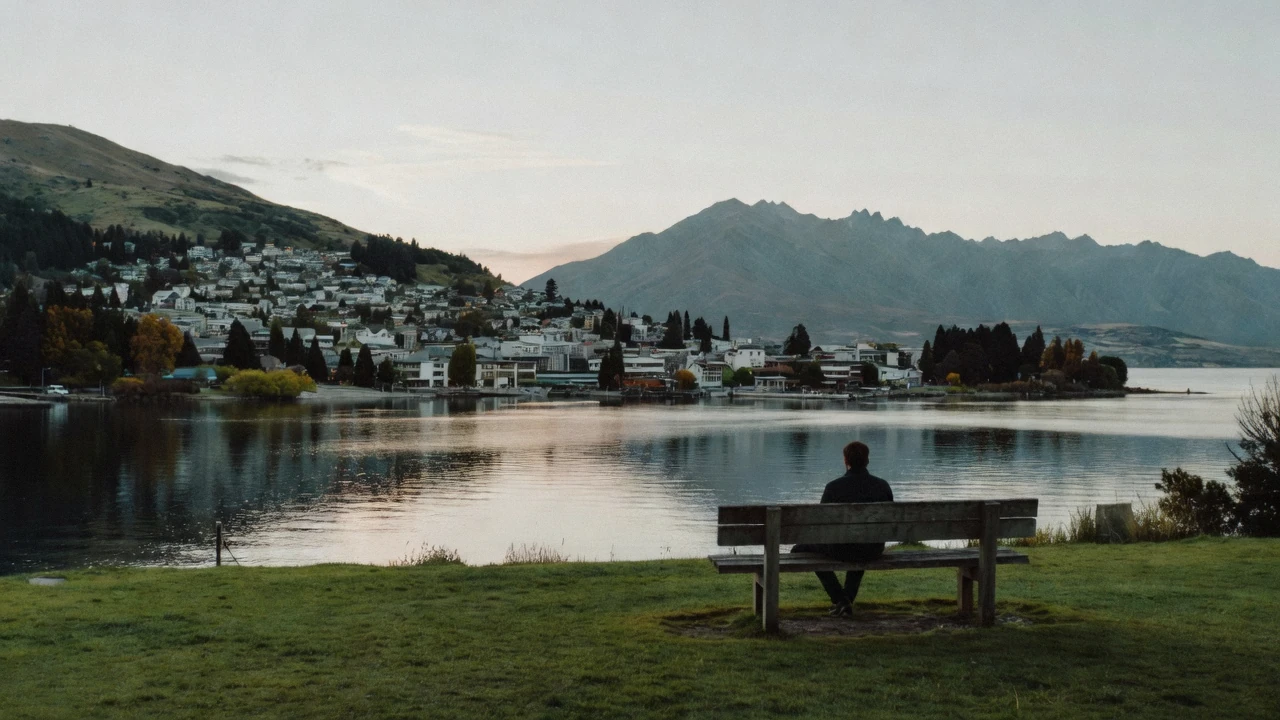
Is Queenstown Worth Visiting? Yes, and Here Is What It Costs You
Is Queenstown worth visiting? Yes, and the reason has almost nothing to do with the activities it is famous for. This page makes the case in figures rather than adjectives, and it makes the case against as well: the town is expensive in one specific direction, it is genuinely crowded in two windows of the year, and several of the experiences people fly here for are over in twenty-five minutes. It ends with the travellers we would send somewhere else instead, because there are some. Everything priced here is cross-checked against the trip costs page, the free half of the argument sits on free things to do, and for anyone planning a visit there is our full guide to things to do in Queenstown.
Quick answer The short answer, the three honest caveats, and who should skip it
Yes. Lake Whakatipu is 80 km long and over 300 m deep for more than half its length, the Remarkables rise straight out of it to 1,943 m, and standing in front of that costs nothing at all: the best hours here are a 2 km loop through the Gardens, a 4 km lakeside track and a free viewing deck over the world's first commercial bungy. The caveats are real. A single 25-minute jet boat ride is $116.20 (NZ$199), a bungy $186.90 (NZ$320) and a fiord day up to 14 hours, and there is no visitor GST refund on any of it. A bare dollar sign on this site means a US dollar, converted from New Zealand dollars at the European Central Bank rate of NZ$1 = $0.584.
Key takeaways
- The landscape is not gatekept. Nothing in the district is ticketed by the town itself, and the free half of Queenstown is where the scenery actually is.
- The activities are short and priced accordingly. What you pay for, and how long it lasts, sets the famous ones against their running time.
- It is dear in one direction only: activities and beds, not transport or entry fees. A bus ride is NZ$2.50 and the whole day priced four ways shows where the money actually goes.
- If you came mainly for the fiord, the Milford day is 12 to 14 hours from here and the Department of Conservation itself recommends doing it from Te Anau instead.
What You Pay For, and How Long It Lasts
The five experiences Queenstown is sold on, set against their published price, their actual duration and the free thing you could do instead in the same landscape.
| The famous thing | Published price | How long it lasts | The free alternative |
|---|---|---|---|
| Shotover Jet through the canyon | $116.20 (NZ$199) adult | 25 minutes on the water, about an hour self-driving | The Arrowtown Chinese Settlement and the Arrow River, free, and the same gold-rush country |
| Kawarau Bridge bungy, the world's first | $186.90 (NZ$320) | A few seconds, inside a visit of an hour or so | Watching from the deck at the same site, free, with a café and free parking |
| Nevis Bungy, 134 m | $230.70 (NZ$395) | 8.5 seconds of freefall inside a four-hour round trip | Queenstown Hill Time Walk, 5.4 km, 2 to 3 hours, about 500 m of climb to a 907 m summit |
| Tandem skydive at 9,000 ft | $209.70 (NZ$359) | Up to 25 seconds of freefall, about 3.5 hours door to door | Ben Lomond saddle from the gondola, 7 km return, 3 to 4 hours, for the same view slower |
| Skyline gondola to Bob's Peak | $40.30 (NZ$69) return | A 480 m climb, then as long as you like | The Tiki Trail beneath it, 2 km, about an hour on foot, free |
Prices are the operators' own, read in Q3 2026; durations are theirs too, and the walk times and distances come from the Department of Conservation's own Queenstown day walks brochure. This is not an argument against booking any of them. It is an argument for knowing what the money buys: the jet boat's 25 minutes are 25 minutes people remember for years, and the bungy is a few seconds by design. The mistake we would warn against is filling a week with four of these and never walking anywhere, because the landscape they take place in is the part that is free.
The Case For: A First-Rate Landscape You Do Not Have to Pay to Enter
The reason to come is geographic rather than commercial, and every figure in it is published by a public authority rather than an operator.
Lake Whakatipu is 80 km long and 293 km², over 300 m deep for more than half that length, and the range on its eastern shore tops out at 1,943 m with the Double Cone above it at about 2,307 m on the Department of Conservation's own map. The town sits at roughly 310 m on the lake edge, which is why the mountains read as walls rather than as distant scenery. None of that is behind a gate.
There is no city entry fee, no visitor tax charged at the door, no ticket for the lakefront, and the district's best short walks are all free and all published by DOC with times and distances: the Queenstown Gardens loop at 2 km and 40 minutes, Sunshine Bay at 4 km return, the Frankton Arm Walkway at 7 km one way in an hour to an hour and a half, Queenstown Hill at 5.4 km and 2 to 3 hours, Ben Lomond at 1,438 m of gain from town. A visitor who walks two of those and takes the NZ$10 ferry across to Kelvin Heights has seen the thing they came for and spent under NZ$15.
The second reason: everything is close
The district is unusually compact for what it contains. Coronet Peak is 16 km and about twenty minutes on a sealed road; the Kawarau bungy site is 23 km and 25 to 35 minutes; Arrowtown, a preserved gold-rush village with a museum open every day but Christmas Day, is 25 minutes on a NZ$2.50 bus; the Gibbston cellar doors are the same distance in the same direction, with tastings from NZ$20. Glenorchy sits at the head of the lake on a road that only opened in 1962.
That density is why a three-day trip here works where a three-day trip in most alpine regions does not, and it is the strongest practical argument for the place. The things to do page puts the whole inventory in one list.
The Case Against: Expensive in One Direction, Busy in Two Windows
The complaints in the forums are mostly accurate. They are also narrower than they sound, and worth separating.
Queenstown is not expensive across the board. Moving around is cheap: an Orbus fare is NZ$2.50 with a Bee Card against NZ$4 in cash, two buses inside 45 minutes count as one, and the ferry across the lake is NZ$10. Entry costs are low or absent: the Lakes District Museum is NZ$14, the Gardens and the walks are free.
What is expensive is the activity layer and the bed. The middle half of nightly rates our sampling returned for a spring midweek night ran from $104.50 to $150.10 (NZ$179 to NZ$257) in Frankton up to $118.60 to $268.60 (NZ$203 to NZ$460) in the town centre, and those are shoulder-season figures. Add one big activity a day at $110 to $230 a head and the daily number moves fast.
The 15 per cent GST inside every displayed price is not reclaimable either: there is no visitor GST refund scheme in New Zealand, and travellers arriving from the European Union, the United Kingdom, Singapore or Australia routinely look for a desk at the airport that does not exist.
Busy, and nobody will tell you how busy
No authority publishes a monthly visitor count for the Queenstown district that we could find, so anyone who tells you the exact number of tourists in town in January is guessing. What can be established from calendars rather than from crowds is where the pressure is: the New Zealand school holidays around Christmas and through January, the July school-holiday fortnight when all four ski fields are running, and one spring weekend, the Queenstown Marathon on Saturday 14 November 2026, which is the district's sharpest single accommodation squeeze. Outside those, May and November are quiet with everything open.
If crowds are the reason you are asking whether the town is overrated, the answer is to move the dates rather than the destination, and the best time to visit page sets out all twelve months.
The third complaint, and the one we think is fair
The town centre is a compact grid of tour desks, souvenir shops and queues, and if the trip is spent inside it the place will feel like a theme park charging alpine prices. That criticism is legitimate and it is also entirely avoidable: it describes a four-block radius, and the answer is to be outside it by nine in the morning. Every argument for Queenstown on this page happens somewhere else, whether that is the Gardens peninsula, the Frankton Arm, the Arrow River or the far end of the lake at Glenorchy.
Who Gets the Most Out of It
Four kinds of traveller for whom the answer is an unqualified yes, and the reason in each case is specific.
The walker, because the density of published, free, well-graded tracks within twenty minutes of a bed is unusual anywhere in the world, and because the alpine ones start from a gondola rather than a trailhead two hours away. The first-time skier, because the fields are close and the first-timer product is sold as one package of transport, pass, gear and lesson rather than as four separate purchases; a first-timer day at Cardrona is exactly that. The nervous adrenaline tourist, because every commercial adventure operator in New Zealand must be registered with WorkSafe and must have passed an independent safety audit, the register is public and searchable, and it is an offence to operate without it.
And anyone with three days rather than three weeks in the South Island, because nothing else in the country packs a lake, an alpine range, a wine sub-region, a gold-rush village and a fiord day into the same twenty-five kilometre radius.
And who should not come
If the fiord is the trip, go from Te Anau. DOC states the Queenstown return to Milford Sound is 600 km and 12 to 14 hours and recommends planning the return from Te Anau instead, which is 240 km and an eight-hour day. If the priority is a quiet lakeside town at a lower price, Wanaka is an hour away over the Crown Range and is a smaller version of the same landscape, though the walk everyone goes there for, Roys Peak, is closed by DOC from 1 October to 10 November each year for lambing. If it is glaciers and the highest peaks, Aoraki / Mount Cook is 3.5 hours away, nothing in the park is ticketed, the Tasman Valley car park is free and the visitor centre charges no entrance.
And if the trip has no budget for the activity layer at all and the walking is not the appeal, then a week here will feel like watching other people spend money. Our day trips page covers the first three, and free things to do answers the fourth.
The Three Pages That Actually Decide It
This page is the argument. These three are the arithmetic behind it.
What a Queenstown trip costs
A day priced four ways from operators' own rates, and the 15 per cent you cannot reclaim: Queenstown trip costs.
- A free day, an ordinary day, a ski day, a Milford day
- GST is inside every price
- Bus fares from NZ$2.50
Free things to do
The half of the town that answers the value question on its own: free things to do in Queenstown.
- Gardens loop, 2 km
- Bungy spectating, free
- Chinese Settlement, Arrowtown
Everything there is to do
The full inventory, so the decision is made against the real list rather than a highlight reel: things to do in Queenstown.
- Lake, mountains, wine, gold
- Two bungy sites, one fiord day
- Nothing closes on a Monday
Is It Worth It: The Questions People Actually Ask
How many days in Queenstown is enough?
Three if you stay in the district, five if the fiord is on the list, and the reason is weather rather than the length of the sightseeing list. Nearly every expensive booking here is weather-conditional, and a longer trip buys second attempts rather than more attractions. The Milford day alone runs 12 to 14 hours return, which effectively costs a whole day of a three-day trip. Our three-day itinerary is the base, and the extra days go on day trips.
Is Queenstown overrated?
The town centre can be, and the landscape is not. Four blocks of tour desks and queues at alpine prices is a fair description of the grid between Shotover and Camp Streets in January, and it is also a description of about one per cent of the district. The lake is 80 km long, the range beside it tops 1,900 m and the walks along both are free. The visitors who come away disappointed are usually the ones who booked four short activities and never left the centre on foot.
Is it better to stay in Queenstown or Wanaka?
Queenstown, unless quiet is the point. Queenstown has the airport, the bus network, the fiord departures and the two closest ski fields; Wanaka is smaller, calmer and an hour away over the Crown Range, whose summit sits at about 1,076 to 1,100 m depending on which authority you read. One caution for a Wanaka-based trip: Roys Peak, the ridge photograph that draws most visitors there, is closed by DOC from 1 October to 10 November every year for lambing. Our Wanaka page covers the day trip and the comparison.
Which is better to visit, Auckland or Queenstown?
They are not the same kind of trip. Auckland is the country's largest city and its main international gateway; Queenstown is an alpine resort town of a few thousand permanent residents whose own airport operates only between 07:00 and 22:00, with just four airlines certified to fly here after dark. If the holiday is scenery, walking or snow, Queenstown wins outright. If it is a city break, Queenstown does not have one to offer: it has no large public museum, no aquarium and no council gallery of any size.
What is the prettiest town in New Zealand?
No authority publishes a ranking, and we would rather say so than dress a preference as a finding. What is defensible is that the two most photographed settlements in this district are not Queenstown itself: Arrowtown, a preserved gold-rush village whose introduced poplars and willows turn through April, and Glenorchy at the head of the lake, reached by a road that only opened in 1962. Both are inside half an hour of the town, which is part of the answer to whether the base is worth it.
Is Queenstown worth visiting if you do not do adventure sports?
Yes, and it is cheaper that way. The lake cruise on a 1912 coal-fired steamer, the Gibbston cellar doors with tastings from NZ$20, the Arrowtown museum at NZ$14, the walks, the hot pools at Arthurs Point and the fiord day are all non-adrenaline and they fill a week comfortably. The one thing to know is that the famous short activities are what the town's marketing is built on, so a non-jumping visitor has to plan a little more deliberately than the brochures assume.
Is Queenstown worth visiting in winter?
It is a different town rather than a lesser one. Four ski fields run on four different calendars between late May and mid October, July and August are the two driest months of the year at 93 mm each, and the daylight shrinks to eight and three-quarter hours at the solstice, which forces one activity a day rather than two. The non-skiing half of the town stays open and some of it is cheaper than in summer. The winter page sets out the season in full.
Other People Answering the Same Question
Three films that argue it out on camera, including one that tests whether the town can be done on a budget at all.
The Queenstown Experience Everyone Recommends… Is It Worth It?
A test of the single most recommended thing to do here, which is the shape of the question this page answers in aggregate.
Video: Growing Up Without BordersWe Spent 4 Days in Queenstown, New Zealand… Was It Worth It?
Four days filmed end to end, useful for judging whether the compact geography argument holds on the ground.
Video: Go For LaunchQUEENSTOWN ON A BUDGET?! Is It Possible?
The counter-case tested directly: what the town looks like when the activity layer is left out of it.
Video: Dane and StaceyVideos load from YouTube only when you press play. They are other people's work, embedded for context, and nothing here is sponsored.
Prices, hours and terms are set by the venue or operator and confirmed at checkout.
We may earn a commission if you book through one of our links, at no extra cost to you. Full affiliate disclosure