 Queenstown City Guide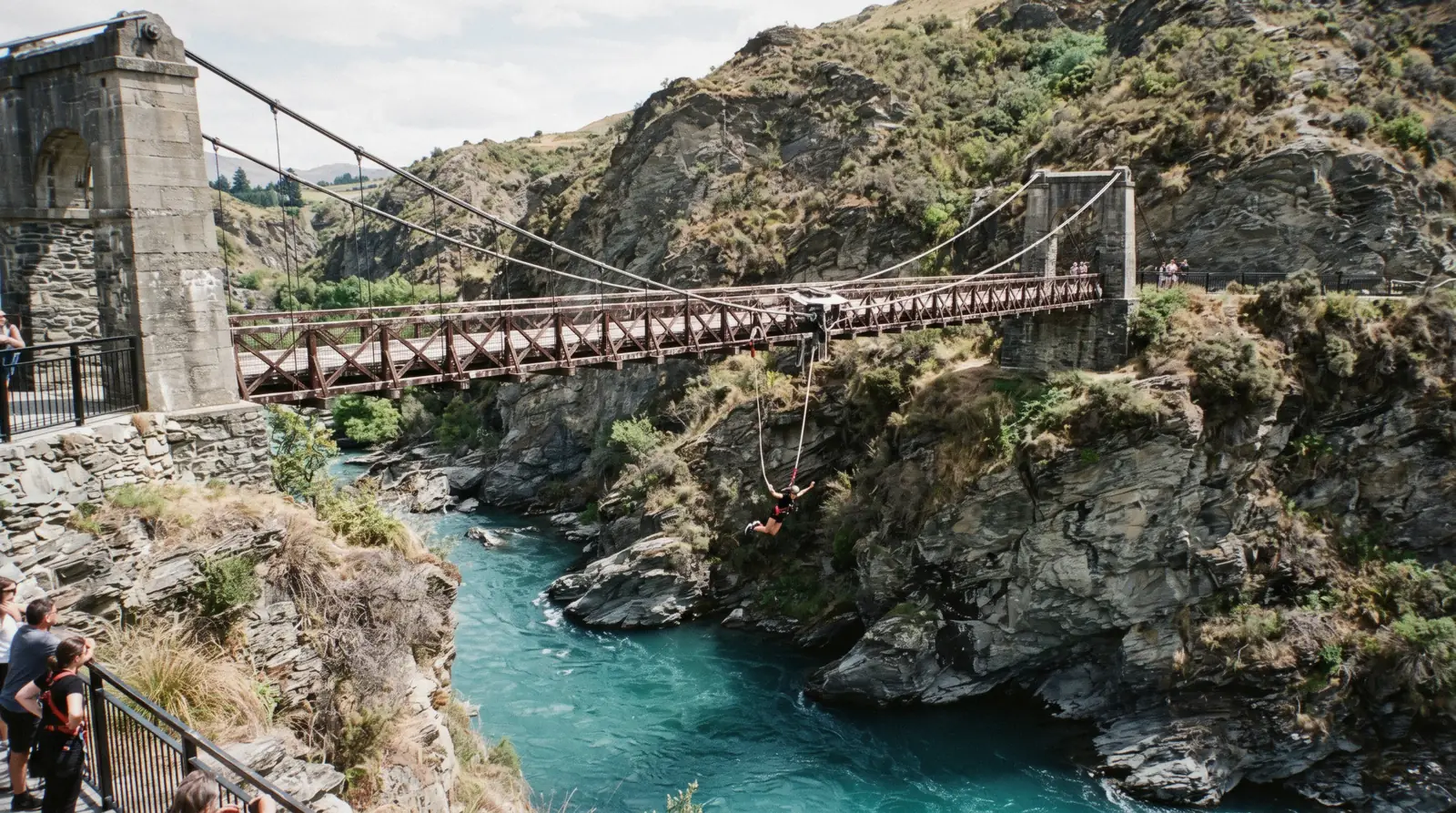
Kawarau Bridge Bungy: the World's First, and the One You Can Watch for Free
The Kawarau Bridge bungy is the place the whole industry started: a 43-metre drop from an 1880 suspension bridge, 23 km east of town on State Highway 6, run by AJ Hackett Bungy New Zealand since 1988. It is also the one adventure activity in the district you can experience without paying anything, because the Kawarau Bungy Centre charges spectators nothing and the viewing deck looks straight down the jump. This page prices the three products sold from the bridge, sets out the age and weight rules the operator applies at check-in, explains what the price does and does not include, and says which of the two Queenstown bungy sites we would send you to. It sits inside the Queenstown city guide (see things to do in Queenstown) beside the adventure activities hub.
Quick answer What it costs, whether watching is free, and how you get out there
The Kawarau Bridge bungy is a 43-metre jump from an 1880 suspension bridge on State Highway 6, 23 km and about 25 minutes east of Queenstown, and it has been running commercially since 1988, which makes it the first site of its kind anywhere. It costs NZ$320, about $186.90, and watching from the deck costs nothing at all. Prices on this site are in US dollars first with the New Zealand dollar in brackets, converted at NZ$1 = $0.584.
Key takeaways
- The one thing nobody tells you: it is free for spectators at the Kawarau Bungy Centre, with a viewing deck over the jump, a cafe, a bar and free parking, so a non-jumping half of a couple pays nothing.
- Photos, video and return transport from central Queenstown are already in the price, which is why the world's first bungy jump costs the same on a platform as it does on the operator's own site.
- The swing takes children two years younger than the jump does, from age 8 against 10, so the Kawarau Swing is the one that works for a younger family.
- If you want height rather than history, the other site is 134 metres and four hours away: the Nevis, and our comparison of the two puts them side by side.
Key facts
Opening hours
| Kawarau Bungy Centre, summer (October to April) | 08:30–17:00 |
|---|---|
| Kawarau Bungy Centre, winter (May to September) | 09:00–16:30 |
| Kawarau Bridge Bungy activity, daily | 09:30–16:00 |
Closed Christmas Day only. Open every other day of the year including public holidays; last activities run 30 minutes before the centre closes
Admission
- Adult
- Kawarau Bridge Bungy from $186.90 (NZ$320), Kawarau Swing from $140.20 (NZ$240), Kawarau Zipride $29.20 (NZ$50)
- Reduced
- Child fares are published direct only: NZ$280 for the bungy, about $163.50, and NZ$200 for the swing, about $116.80. The platforms sell one price for everyone
- Free
- Spectators, the viewing deck, the car park for cars, campervans and coaches, and the walk across the bridge itself on the Queenstown Trail
Planning it
- Time needed
- 1 hour 30 minutes self-driving, 2 hours 30 minutes on the Bungy Bus, per the operator's own duration note; 45 minutes if you are only watching
- Book ahead
- Recommended — a few days
- Address
- Kawarau Bungy Centre, State Highway 6, Gibbston Valley, Queenstown, about 23 km east of the town centre
The three products sold from the Kawarau Bridge, priced from bungy.co.nz and from GetYourGuide on in Q3 2026. The operator's own row is first and its link carries no tracking. US dollar figures are converted from the operator's New Zealand dollar prices at NZ$1 = $0.584; the platform figures are the platform's own US dollar prices, which is why the two columns land within a dollar of each other.
Booking direct and booking through a platform cost the same here, so the question is which of the two cancellation windows and which fare structure you need.
| Option | Price | Age from | What decides it | Book |
|---|---|---|---|---|
| Kawarau Bridge Bungy, booked directFamilies, anyone under 15 who needs a parent to sign consent at check-in, and anyone who wants the operator's own reservations team on the phone | $186.90 (NZ$320) adult, $163.50 (NZ$280) child | 10 | The only place a child fare exists, and the only booking that comes with the activity t-shirt. Change or cancel free up to 48 hours out, after that nothing comes back | Official site |
| Kawarau Bridge Bungy on GetYourGuideAnyone booking a Queenstown day that is still moving, who wants the shorter cancellation window more than the child fare | $187.31 | 10 | Free cancellation up to 24 hours before the start time, against the operator's 48. Photos, video and the transfer from town are included either way; rated 4.9 from 207 reviews | Check Availability |
| Kawarau Swing, solo, tandem or tripleYounger children, riders who want to share the drop with one or two friends, and anyone who wants the fall without the bounce | $140.48 | 8 | A 43-metre launch into an arc across the gorge rather than a rebound, with a lower minimum age and a lower minimum weight of 30 kg. Rated 4.9 from 45 reviews | Check Availability |
| Kawarau Bungy and Swing comboTwo people who cannot agree on jump or swing, and anyone making the 46 km round trip worth a second activity | $269.25 | 10 | Both products in one visit for less than the two bought apart. The operator sells the same pairing direct at $268.60 (NZ$460) and prints a NZ$100 saving on it | Check Availability |
The Kawarau Zipride, a seated cable ride rather than a fall, is sold direct only at $29.20 (NZ$50), age 8 and up, with 8 and 9 year olds riding tandem with an adult of 20 or over. No platform on this page lists it. The operator also discounts across sites rather than within one: book two AJ Hackett activities anywhere in New Zealand, excluding the Zipride, and NZ$50 comes off each; book three and NZ$70 comes off each.
Kawarau Bridge Bungy Tickets Compared
Three ways to buy the same bridge. The prices are the platform's own, and every one of them already includes photos, video and the return transfer from central Queenstown.
 from $187.31
Most booked
from $187.31
Most booked
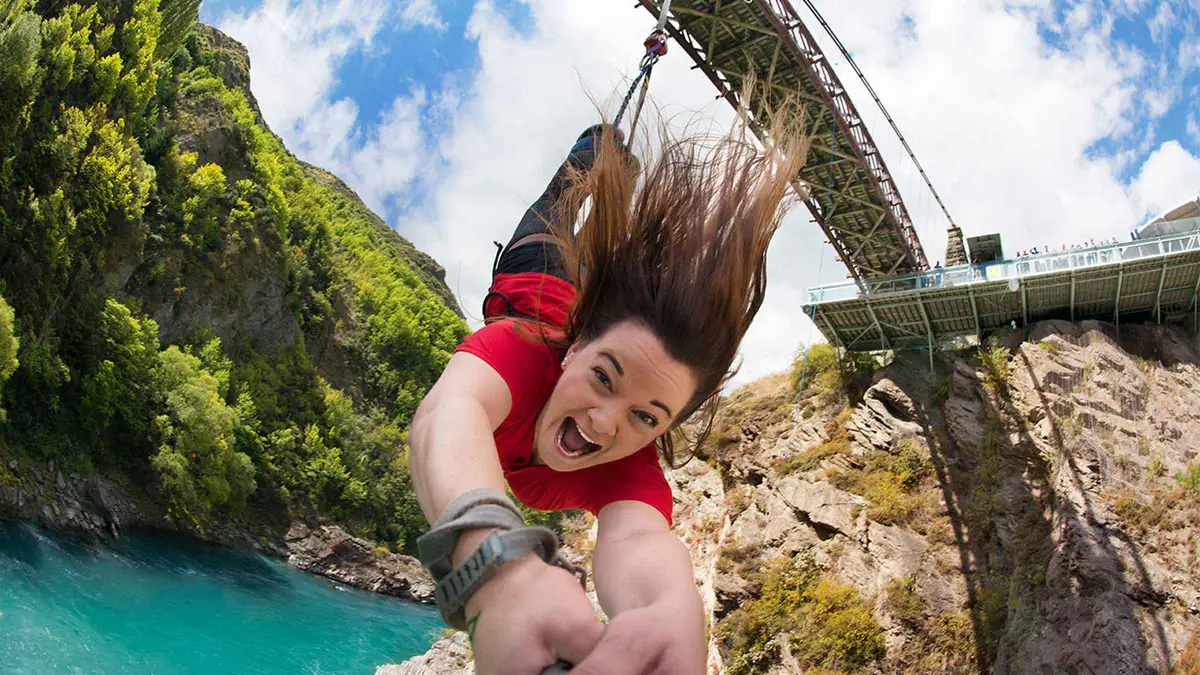
Queenstown: Kawarau Bridge Bungy - World's First Bungy!
The 43-metre jump from the bridge where commercial bungy began, solo or tandem, with a water-touch option if you want to be dunked in the Kawarau. Photos, video and the shuttle from town are in the price.
Check Availability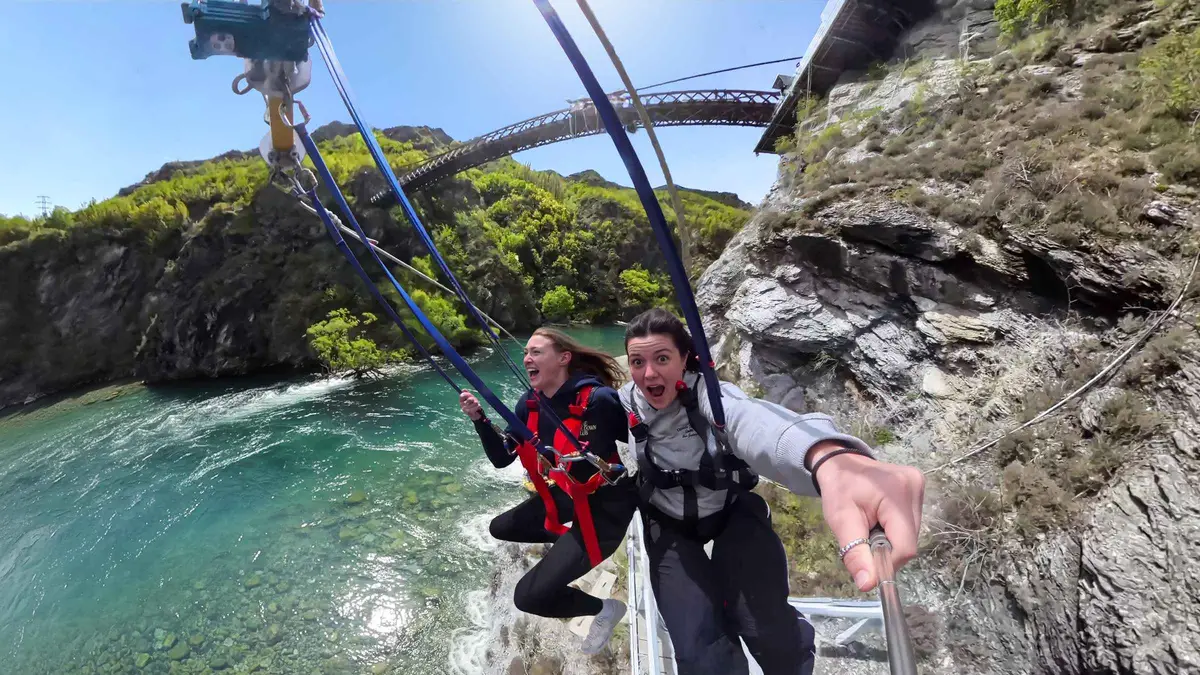 from $140.48
Queenstown: Kawarau Swing! (Solo, Tandem or Triple!)
The swing rather than the jump, launched from the same site, and it takes ages 8 and up, two years younger than the bungy alongside it. Solo, tandem or three at once, with photos and video included.
Check Availability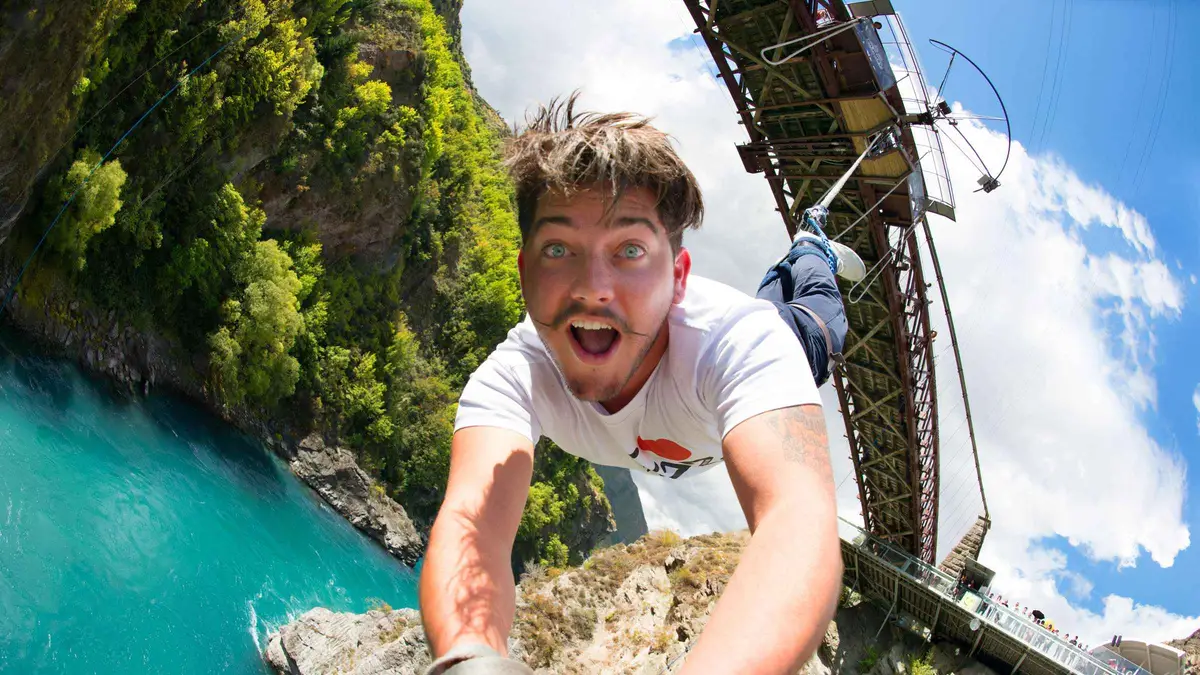 from $269.25
Queenstown: Kawarau Bungy & Swing Combo
Both Kawarau products in one visit, jump first and swing after, sold below the cost of booking them separately. One hour on site, free transport from central Queenstown, minimum age 10.
Check AvailabilityPrices, ratings and details are the platform's own. Dollar figures are the listed prices. The platform bills in your account's currency.
How Much Time to Give the Kawarau Bungy Centre
The operator publishes a duration for each way of getting there, and the gap between them is an hour. These are AJ Hackett's own figures from the Kawarau Bridge Bungy activity page, set against the drive time it publishes for the same road.
The jump takes seconds. Everything else on the clock is transport, check-in and the queue on the bridge, and the operator is unusually straight about it: self-drive is a ninety-minute errand, the free bus is a half-day. Read the last column, because the routing you pick decides what else fits into the afternoon.
| How you go | Time to allow | What it costs | Who it suits | What it leaves room for |
|---|---|---|---|---|
| Self-drive, jumping | 1 hour 30 minutes | Fuel and nothing else, parking is free | Anyone with a car who wants the day back | Gibbston Valley cellar doors are on the same road, minutes away |
| Bungy Bus, jumping | 2 hours 30 minutes | Free, but bookings are essential and seats are limited | Visitors without a car, and anyone who would rather not drive afterwards | Half a day. Book a morning slot and the afternoon is still yours |
| Self-drive, watching only | 45 minutes to 1 hour | Nothing at all | Partners, parents, and anyone who wants the story without the drop | It works as a stop on the way to Cromwell or Wanaka rather than a trip of its own |
The slot we would book
The first jump of the day, self-driving. Two reasons. The centre opens at 8:30 am in summer and the activity itself starts selling at 9:30 am, so an early slot puts you on the bridge before the coaches arrive from town, and a 43-metre jump with nobody watching is a very different thirty seconds from a 43-metre jump with a deck full of strangers. The other reason is the light: the gorge is deep and narrow, and the video that comes free with your jump is better before the sun is directly overhead.
If you do not have a car, take the Bungy Bus anyway rather than skipping the site. It is free, it leaves from the Queenstown Bungy Centre at the corner of Shotover and Camp Streets in the middle of town, and the operator asks you to check in 30 minutes before it departs. The catch is stated plainly on its own page: transport availability is limited and the remaining seats show up during booking, so if the bus is full for your preferred time the jump may still be available for a self-driver.
Where the operator's own hours disagree with each other
This is worth knowing before you plan a late afternoon. The Kawarau Bungy Centre page publishes seasonal opening hours, 8:30 am to 5:00 pm from October to April and 9:00 am to 4:30 pm from May to September, and adds that last activities run 30 minutes before closing. The Kawarau Bridge Bungy activity page publishes a flat 9:30 am to 4:00 pm all year. Both are the operator's own pages and they do not agree.
The reconciliation is that the centre is open longer than the jump runs: the cafe, the shop and the viewing deck keep the seasonal hours, the jump keeps the narrower ones. If you are booking a jump, work to 9:30 am and 4:00 pm and you will never be caught out. If you are driving out to watch, the seasonal hours are the ones that matter, and in winter that means the last jumpers go at 4:00 pm and the light is gone by five.
What the 43-Metre Jump Is Actually Like, and What the Price Covers
The physical facts, the rules the crew apply at the edge, and the list of things that are already paid for. All of it from the operator's activity page and national FAQ.
Forty-three metres is 141 feet, which is roughly a fourteen-storey building, and the drop ends over green water in a gorge narrow enough that the bridge deck feels like a plank. The bridge itself is the point: it is a real 1880 suspension structure, not a purpose-built tower, and it moves under you. The walk out from the bank is short and the crew talk the whole way.
You are not pushed. The operator states this outright in its FAQ, and the wording is worth quoting because it is the fear most people arrive with: as a rule they never push guests unless asked. What actually happens is that a jump master counts, and you go on the count or you go on the next one.
The water touch, and why it is never promised
Kawarau is the site where the water touch exists, and it is the reason a lot of people choose the bridge over the higher jump up the valley. You tell your jump master at check-in that you want one, and they let out enough cord for your head, hands or torso to go into the Kawarau at the bottom of the fall.
What the operator will not do is guarantee it. Its own words are that a water touch is possible at the Kawarau Bridge but not guaranteed because of factors beyond its control, the river level being the main one, and the national FAQ adds that water touches are always at the crew's discretion on the day. The same high river that removes the water touch also tightens the weight rule, as below. If a dunking is the whole reason you are booking, ask on the phone the morning of your slot rather than at the edge.
Age, weight and the number that changes with the river
The bungy takes jumpers from age 10, and anyone under 15 needs an adult to sign consent at check-in, which means the adult has to be there rather than waiting in town. The weight range is 35 kg to 150 kg whether you jump alone or tandem, and here is the figure most pages miss: a maximum of 130 kg applies when river levels are high. If you are near that mark, the operator asks you to call the reservation centre for the conditions on the day.
Tandem jumping adds two more rules. The combined weight of a tandem pair cannot exceed 235 kg, and the difference between the two jumpers cannot exceed 30 kg, which quietly rules out a lot of parent-and-child pairings. The swing beside it is looser on every count: age 8, minimum weight 30 kg, 150 kg solo and 240 kg for a tandem or a three-person launch.
The medical list is published rather than hinted at. Pregnancy and photosensitive epilepsy are outright exclusions. Osteoporosis, scoliosis and a recent concussion need a doctor's certificate. Blood pressure, heart conditions, epilepsy, recent fractures, diabetes, asthma, prosthetics and panic or anxiety attacks are all things the crew ask you to declare rather than things that stop you, and everyone has to be sober at check-in: anyone judged to be under the influence is refused and no refund is given.
What is included, and the two things that are not
The price covers more than the fall. Photos and video are captured and included, delivered as a link to an online media portal with unlimited downloads for 60 days, and if you miss that window the operator asks you to email its media team rather than treating it as gone. Return transport from central Queenstown on the Bungy Bus is free and included, and so is parking if you drive. Book direct rather than through a platform and the activity t-shirt is added, which is the operator's stated reason for booking on its own site.
The two things that are not included are your own camera and your own glasses. In Queenstown, personal cameras are not permitted during the activity; action cameras may be allowed on some experiences, must be securely mounted, and the crew's decision on the day is final. Smart glasses and wearable recording devices are banned outright across all sites. Prescription glasses cannot be worn either, for the obvious reason that they leave at speed, but prescription safety goggles are available free of charge at the site, which is a detail worth knowing if you are functionally blind without them.
Getting to the Kawarau Bungy Centre from Queenstown
One road, two ways along it, and a car park that is free in a district where almost nothing is. Distances and times are the operator's own.
The Kawarau Bungy Centre sits on State Highway 6 at the Kawarau Bridge, roughly halfway between Queenstown and Cromwell. From Queenstown the operator puts it at around 23 km and a 25-minute drive; from Cromwell, 27 km and about 30 minutes. There is no turn to miss: the centre is signposted, it is on the highway, and the car park is on the north side.
Parking is free for cars, campervans and coaches, which is a genuine outlier in a district where the town centre charges by the hour. That, plus free entry for spectators, is why the site works as a stop rather than a destination. Coming back from a Gibbston winery, from Cromwell or from the Crown Range, it costs you twenty minutes and nothing else to pull in and watch someone else do the frightening part.
The Bungy Bus, which is free and which sells out
If you have no car, the operator runs its own transport and does not charge for it. The Bungy Bus departs the Queenstown Bungy Centre in The Station building at the corner of Shotover and Camp Streets, bookings are essential, and the fare is nothing. Check in 30 minutes before departure. Available departure times and remaining seats appear during the online booking process, and the operator says outright that transport availability is limited: if the bus has no seat at your preferred time, a self-drive slot may still exist.
That asymmetry is the practical reason to book the bus first and the jump second. It also explains the two durations: 1.5 hours if you drive yourself, 2.5 hours if the bus takes you, for exactly the same thirty seconds in the air. Spectators can use the bus too, on the same free basis, which makes the whole outing free for anyone not jumping.
What else is on this stretch of road
The bridge sits at the western end of the Gibbston Valley, Central Otago's pinot noir sub-region, and the cellar doors start within a few minutes' drive. That pairing is the single best reason to self-drive: jump at 9:30 am, and you are at a Gibbston Valley tasting before noon with the adrenaline still going, or on a wine tour that already includes the drive if somebody in the car would rather not be responsible for it afterwards.
The bridge is also on the Queenstown Trail, the district's cycle network, and walkers, runners and riders cross it for nothing. The trail deck is separate from the jump platform, so a rider can stop, watch and carry on. Arrowtown is 20 minutes away by the back road, which makes an obvious loop: the bridge, a cellar door, the old gold town, home.
Weather, Cancellations and Getting Your Money Back
The two policies that decide what happens when a plan changes, quoted from the operator's own FAQ, plus the safety regime that sits behind every commercial jump in New Zealand.
Rain does not stop a bungy. The operator's position is that it operates in most weather conditions, including rain, and that if weather exceeds its operational limits and it cannot run, you are offered a transfer, a reschedule or a refund. What does move is the harder limit: the FAQ notes that weather conditions may affect operational weight ranges, which is the same mechanism as the 130 kg high-river ceiling described above. Wind, not rain, is what closes a bungy site.
That matters for the shape of your trip more than for the day itself. Because refusals are conditions-driven rather than calendar-driven, the sensible move is to book the jump early in your stay, not on your last morning. There is no second chance on a departure day.
The 48-hour rule, and the 1.99 percent nobody expects
The operator's refund policy has three branches and they are worth reading in full before you pay. If AJ Hackett cancels for weather or safety, you get a full refund or a free reschedule. If you cancel more than 48 hours before your activity, you get 100 percent back minus a 1.99 percent card transaction fee. Cancel inside 48 hours and nothing comes back. Deciding not to jump once you are standing on the bridge is treated as a no-show and is generally non-refundable, which is the honest and slightly brutal part: the price buys the slot, not the leap.
Compare that with the platform listings in the table above, which all carry free cancellation up to 24 hours before the start time. For a trip whose shape is still moving, that 24-hour window is worth more than the t-shirt. For a family that needs a child fare, the operator's site is the only place one exists. Refunds, once requested, take five to ten business days.
The operator also asks for at least 48 hours of notice in the other direction: it strongly recommends booking at least 48 hours ahead to secure a preferred date and time. It does not publish how far ahead Kawarau sells out, and neither does any page we could find, so treat 48 hours as a floor rather than a forecast in December and January.
How to check the operator rather than trust it
New Zealand regulates this. Commercial adventure activity operators have to be registered with WorkSafe, and registration requires passing an independent safety audit. The public register at services.worksafe.govt.nz lists every registered operator, the activities it is authorised to provide and the period the authorisation covers, and a status of Current, Suspended or Cancelled. It is an offence to provide an adventure activity without being on it.
That register is the answer to the search that brings a lot of people to this page, which is some version of "kawarau bridge bungy accident". You do not have to take a marketing line about an impeccable safety record on trust: type the operator's name into the register and read what the audit actually authorises. Behind it sits the other half of the New Zealand system. ACC's no-fault scheme covers everyone, including visitors, who are injured in an accident here, whoever was at fault, and your health provider lodges the claim for you. What it does not cover is illness, disrupted travel plans, or getting you home, which is ACC's own stated reason for telling visitors to buy travel insurance anyway. Our safety page has the rest of it.
From Gold Road to Bungy Bridge in Eight Dates
How a Victorian cart bridge to the goldfields became the birthplace of a global industry, and then a reporting point for aircraft.
-
1880
The bridge is built for the goldfields
The Kawarau Gorge Suspension Bridge is completed in late 1880 to a design by Harry Higginson, as a key access route to the Central Otago goldfields. It is 43 metres above the river, which is the number the whole modern business is built on.
-
1963
The traffic leaves
A new highway bridge on State Highway 6 takes the road traffic and the old suspension bridge is left standing with nothing to carry. For a quarter of a century it is a redundant piece of Victorian engineering in a gorge.
-
1987
A New Zealander jumps off the Eiffel Tower
AJ Hackett makes a bungy jump from the Eiffel Tower, the stunt that turns an obscure experiment into a name. He is arrested and released, and the footage does the rest.
-
1988
The world's first commercial bungy opens here
Hackett founds the first commercial bungy site on the Kawarau bridge, the beginning of an industry that now spans three New Zealand cities and a good part of the world. The operator's own line is that it has been throwing people off things since 1988.
-
2011
Listed as engineering heritage
An Engineering Heritage Register report is published on the bridge; it is classified by the New Zealand Historic Places Trust as a Category I historic place, the highest grade, and sits inside a Department of Conservation reserve.
-
2017
Pilots call it Bungy Bridge
The Civil Aviation Authority's Queenstown visual flight guide refers to the structure as Bungy Bridge and uses it as a reporting point for general aviation aircraft approaching Queenstown Airport. The jump has become a navigation landmark.
-
Today
A trail crosses it and a deck watches it
The bridge carries walkers, runners and cyclists on the Queenstown Trail as well as jumpers, and the Kawarau Bungy Centre beside it runs a free viewing deck, a shop, a cafe and a bar. Three products are sold from the bridge: the bungy, the swing and the Zipride.
-
Every day but one
The one closure
The centre is open daily including public holidays and closes on Christmas Day only. There is no seasonal shutdown and no weekly closing day, which is unusual enough in a tourist town to be worth stating.
Sources: the Wikipedia article on the Kawarau Gorge Suspension Bridge and its cited Engineering New Zealand, Heritage New Zealand and Civil Aviation Authority references; the Wikipedia article on AJ Hackett for the 1987 Eiffel Tower jump and the 1988 founding; and AJ Hackett Bungy New Zealand's own Kawarau Bungy Centre pages.
Kawarau Bridge Bungy: What to Do and What to Skip
Six things that change your day at the bridge, and six worries you can put down.
Do
- Book the bus before you book the jump. Seats are limited and free, the jump is not, and the operator shows remaining seats only during checkout.
- Tell the jump master you want a water touch at check-in, not at the edge. It is the only moment the decision can still be made.
- Bring an adult who will physically be at the centre if the jumper is under 15, because consent is signed at check-in and not online.
- Call the reservation centre the morning of your slot if you are near 130 kg, because that is the ceiling that applies when the river is high.
- Arrive 15 minutes before your booked time if you are driving, and 30 minutes before the bus if you are not.
- Send the non-jumpers anyway. The deck, the parking and the atmosphere cost nothing, and the view of the jump from below is better than the view from the platform.
Don't
- Do not move your booking because it is raining. The operator runs in most weather including rain, and it is wind that stops a jump.
- Do not leave it to the last morning of your trip. If conditions cancel you, there is no second slot.
- Do not plan to film it yourself. Personal cameras are not permitted during the activity in Queenstown and smart glasses are banned at every site.
- Do not pay for photos. They are included, delivered to an online portal, and downloadable for 60 days.
- Do not assume a tandem jump works for a parent and a child. The weight difference between the two of you cannot exceed 30 kg.
- Do not cancel at 47 hours and expect a refund. The direct booking window is 48 hours, and inside it nothing comes back.
Every rule here is from AJ Hackett Bungy New Zealand's Kawarau Bridge Bungy activity page and its national FAQ.
Five Things Most Visitors Do Not Know About the Kawarau Bridge Bungy
Each of these came off an official page rather than a brochure, and each carries its source in brackets.
The evidence layer of this page. If one of these decides your booking, the bracket tells you whose page to open.
- The bridge is not owned by the bungy company and is not a private structure: it sits in a Department of Conservation reserve, is a Category I historic place, and carries walkers, runners and cyclists on the Queenstown Trail across the same deck. (Wikipedia, Kawarau Gorge Suspension Bridge, citing Heritage New Zealand and Engineering New Zealand)
- The maximum jumper weight is not one number. It is 150 kg normally and 130 kg when river levels are high, and the operator asks you to phone for the figure on the day. (bungy.co.nz, Kawarau Bridge Bungy activity page)
- The shuttle from central Queenstown is free, but it is capacity-limited in a way the jump is not, so the bus can be full on a morning when the bridge is not. (bungy.co.nz, Kawarau Bridge Bungy, Getting There)
- Cancelling more than 48 hours out does not return all of your money: the refund is 100 percent minus a 1.99 percent card transaction fee, and refunds take five to ten business days. (bungy.co.nz FAQ, refund policy)
- Pilots use it as a landmark. The Civil Aviation Authority's Queenstown guide calls the structure Bungy Bridge and treats it as a reporting point for general aviation aircraft on approach to the airport. (Civil Aviation Authority of New Zealand, In, Out and Around Queenstown, cited by Wikipedia)
Watching Without Jumping, Which Costs Nothing
The half of this site that has no price on it, and the reason the Kawarau Bungy Centre works as a stop for people who have no intention of leaving the bridge.
The operator states it in one line: it is free for spectators to check out bungy jumping and get amongst the atmosphere at the Kawarau Bungy Centre. There is no gate, no ticket and no minimum spend. The centre has a large viewing deck built over the gorge, a shop, a cafe and an outdoor bar, and the free car park takes cars, campervans and coaches.
That is a genuinely unusual arrangement, and it is worth comparing with the other site. At the Nevis, spectating costs $29.20 (NZ$50) a head, because the only way in is the operator's own 4WD bus and you are paying for the seat rather than the view. Here the road goes past the door, so watching is free. If your group splits between people who want to jump and people who very much do not, this is the site that costs the second group nothing.
What you actually see from the deck is better than what a jumper sees. The bridge is side-on, the drop is fully visible from the platform to the recovery boat, and the reaction at the bottom carries up the gorge. Give it 45 minutes and you will watch a dozen people, which is also the cheapest way to decide whether you want a slot yourself. Plenty of people watch, book on the spot and jump the same morning, which the free parking and the on-site desk make easy. If you would rather compare the whole district's inventory first, the things to do hub lists what else is bookable and the free things to do page collects the rest of what costs nothing. Once you have decided how the bridge fits into the rest of your stay, the Queenstown tours, from half day tours to guided tour packages make it easy to slot a Kawarau morning into a fuller itinerary.
Kawarau Bungy Centre Map: the Bridge, the Road and the Pickup Point
Where the bridge sits on State Highway 6, where the free bus leaves from in town, and what else is within a short drive. Coordinates for the bridge and the town pickup are from OpenStreetMap; the rest are approximate.
Bridge and Nevis coordinates are from OpenStreetMap nodes recorded in our facts pack. Gibbston and Arrowtown pins are approximate town-centre positions.
What Else Fits Around a Morning at the Bridge
The jump is 90 minutes end to end if you drive, so the real question is what goes in the rest of the day. Distances are the operator's own figures or the drive times on the same highway.
Gibbston Valley wineries
The cellar doors begin almost immediately past the bridge, which makes the standard Central Otago morning: jump at 9:30, taste pinot noir by 11. If nobody in the car wants to drive afterwards, a guided wine tour collects you from town instead.
Five to ten minutes' drive east on State Highway 6The Nevis bungy
The height version of the same company's product: 134 metres, an 8.5-second freefall, no public road in. The operator sells the two jumps as a combo, and our comparison of the two sites is the page to read if you can only do one.
Four hours round trip from central Queenstown, or shorter if you join at the Kawarau centreAdventure activities in Queenstown
Bungy is one of six or seven ways to be frightened for money in this valley. The adventure hub sets the jet boat, the canyon swing, the skydive and the rafting against each other on price and on how much of the day each one eats.
The hub that compares everything bookableKawarau Bridge Bungy Questions
What is the most famous bungy jump in New Zealand?
The Kawarau Bridge, on almost any measure. It is the world's first commercial bungy site, opened in 1988 on an 1880 suspension bridge that had been out of use since 1963, and it remains the one people mean when they say they went bungy jumping in Queenstown. It is not the highest in the country: that is the 134-metre jump at the Nevis, which is up a private 4WD road and is a four-hour commitment rather than a 90-minute one. If the story matters more to you than the number, the world's first bungy jump is the one to book.
How high is the Kawarau Bridge bungy?
Forty-three metres, or 141 feet, above the Kawarau River. That figure comes from the bridge itself rather than from a platform built on top of it: the Kawarau Gorge Suspension Bridge was completed in 1880 and sits 43 metres over the water. The Kawarau Swing launches from the same 43-metre height, but into an arc across the gorge instead of a rebound, which is why it feels like a different activity at a lower price.
Is it free to watch the bungy at the Kawarau Bridge?
Yes, completely. The operator's own wording is that it is free for spectators to check out bungy jumping at the Kawarau Bungy Centre, and that includes the viewing deck over the gorge, the shop, the cafe and the outdoor bar. Parking is free too, for cars, campervans and coaches, and spectators can even use the free Bungy Bus from town. That makes this the rare Queenstown attraction where half your group can pay nothing, which the watching section covers in full. It is not the case at the other site: a spectator seat at the Nevis costs $29.20 (NZ$50) because you are paying for the 4WD ride in.
Can you touch the water on the Kawarau Bridge bungy?
Sometimes, and it is the site's signature. Tell your jump master at check-in that you want a water touch and the crew let out extra cord so you go into the Kawarau at the bottom of the fall. The operator is careful not to promise it: a water touch is possible at the Kawarau Bridge but not guaranteed, because of factors beyond its control such as the river level, and it is always at the crew's discretion on the day. The same high water that removes the touch also drops the maximum jumper weight from 150 kg to 130 kg, which is set out in the jump section.
How do you get to the Kawarau Bridge bungy from Queenstown?
Two ways, and one of them is free. Self-driving is about 23 km and 25 minutes east on State Highway 6, with free parking on site, and the operator asks you to allow 1 hour 30 minutes for the whole trip. The Bungy Bus leaves from the Queenstown Bungy Centre at the corner of Shotover and Camp Streets, costs nothing, requires a booking, and turns the outing into 2 hours 30 minutes. Seats are limited and shown during checkout, so book the bus before you book the jump. Getting there has the detail, and our getting around page covers the district's transport generally.
What is included in the Kawarau Bridge bungy price?
The jump, photos, video and the return transfer from central Queenstown, plus the activity t-shirt if you book on the operator's own site. Media arrives as a link to an online portal with unlimited downloads for 60 days. What is not included: your own camera, which is not permitted during the activity in Queenstown, and your own glasses, which cannot be worn, although free prescription safety goggles are available at the site. The ticket table compares what the operator and the platforms each add.
What happens if the weather cancels my Kawarau bungy?
You get a full refund or a free reschedule. The operator runs in most weather conditions including rain, and only stops when conditions exceed its operational limits, at which point it offers a transfer, a reschedule or a refund. Weather can also narrow the weight range rather than cancel the day outright. If you cancel yourself, the window is 48 hours for a direct booking, with a 1.99 percent card fee deducted, against 24 hours on the platform listings in the ticket table. Book the jump early in your stay rather than on your last morning.
What is the minimum age for the Kawarau bungy and the Kawarau Swing?
Ten for the bungy and eight for the swing, with anyone under 15 needing an adult to sign consent in person at check-in. The weight rules differ too: the bungy runs 35 kg to 150 kg, dropping to 130 kg when the river is high, while the swing starts at 30 kg and allows 240 kg combined for a tandem or three-person launch. For a family with a younger child, the Kawarau Swing is usually the answer, and our Queenstown with kids page sets out the rest of the age limits in the district.
The Kawarau Bridge Bungy on Film
Three views of the same 43 metres: the operator's own, a platform walkthrough and a first-timer who films the fear rather than the jump.
Kawarau Bungy - Queenstown, New Zealand
The operator's own film of the site, useful for seeing the bridge, the deck and the recovery boat in one piece.
Video: AJ Hackett Bungy NZKawarau Bridge Bungy Jump in Queenstown, New Zealand
A run through the check-in, the walk out and the jump itself, at the pace it actually happens.
Video: ViatorDoing the World's FIRST Bungy Jump (and Ours Too) | Kawarau Bridge, New Zealand
Two first-timers, which is the honest version if you are trying to judge whether you will go on the count.
Video: Holly and LukeVideos load from YouTube only when you press play.
Prices, hours and terms are set by the venue or operator and confirmed at checkout.
We may earn a commission if you book through one of our links, at no extra cost to you. Full affiliate disclosure