 Queenstown City Guide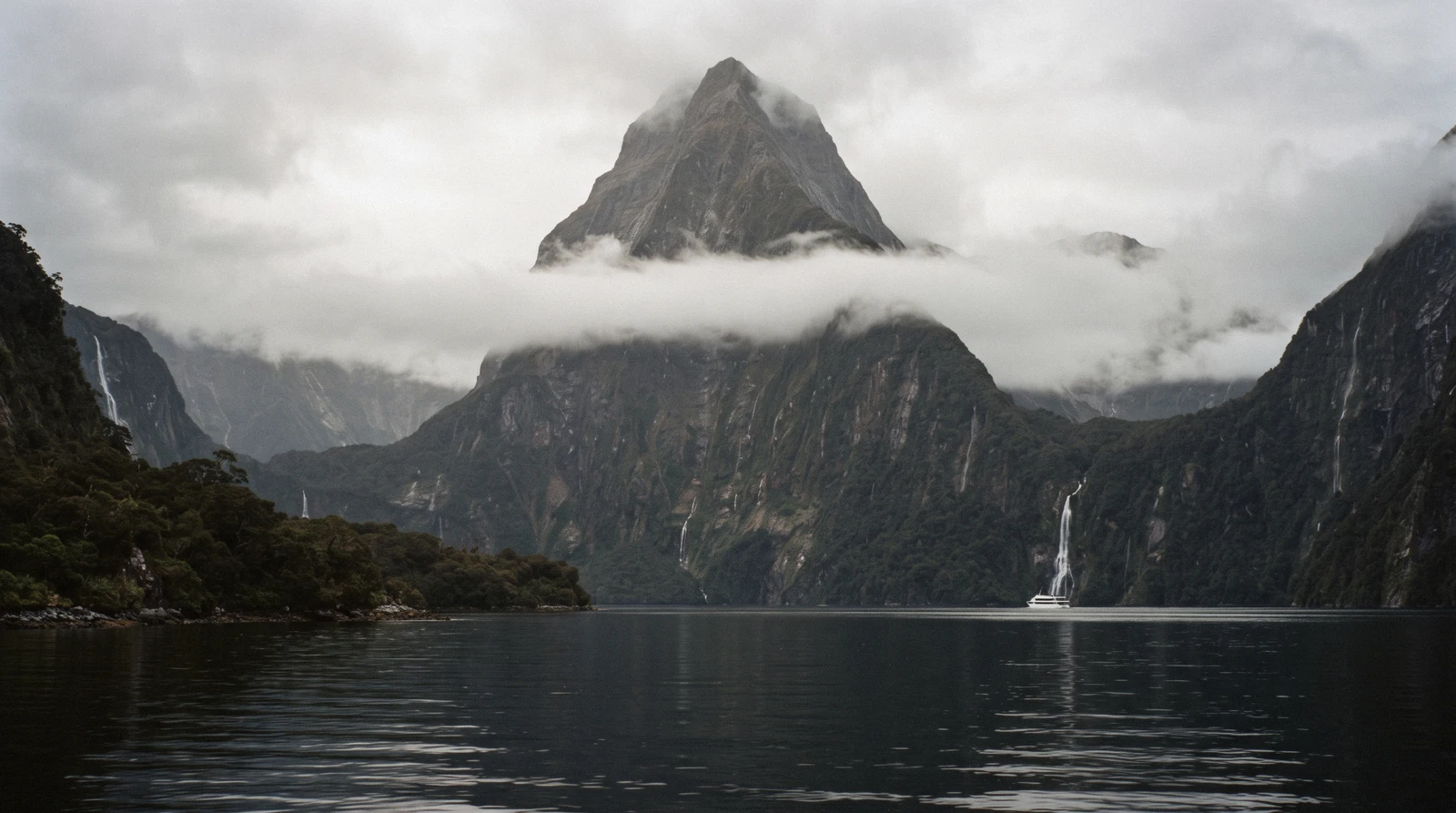
Milford Sound Day Trip from Queenstown
A Milford Sound day trip from Queenstown is the longest thing most visitors do in New Zealand and the one they research least. The Department of Conservation puts the return road journey at 600 km and 12 to 14 hours, and recommends planning the trip from Te Anau instead. This page prices the four ways of doing it anyway, sets out the Milford Road rules that decide whether the day happens at all, and says which routing we would book. It sits inside the Queenstown city guide, alongside things to do in Queenstown and the day trips hub that compares every destination side by side.
Quick answer How long the day is, what it costs, and which routing to book
The Department of Conservation states the Queenstown to Milford Sound return as 600 km and 12 to 14 hours, and recommends planning the trip from Te Anau instead. Prices on this site are in US dollars first with the New Zealand dollar in brackets, at NZ$1 = $0.584.
Key takeaways
- Five hours on the coach each way, about two hours on the water. If that ratio is unacceptable, the fly-cruise-fly day collapses it to five hours in total with roughly 45 minutes of flying each way.
- The cheapest way onto the fiord is a shared coach: the coach and cruise day with hotel pickup is the most reviewed of the five and includes lunch, while the operators' own coach fares start at $121.00 (NZ$207.20).
- Nothing at Milford is ticketed. The only charge on arrival is car parking at NZ$10 an hour, which is why driving it yourself saves less than the arithmetic suggests.
- If the Milford Road is closed for avalanche control, the day does not run. Our best time to visit page has the season picture and the day trips hub has the shorter alternatives.
Key facts
Opening hours
| Fiordland National Park, open access | 00:00–23:59 |
|---|---|
| RealNZ coach departures from Queenstown | 06:45–07:35 |
| Southern Discoveries Nature Cruise sailings | 11:15–13:30 |
Closed None. State Highway 94 closes without notice for avalanche control and weather, most often between June and October
Admission
- Adult
- No entry fee for Milford Sound or Fiordland National Park. Operator day trips from Queenstown start at $121.00 (NZ$207.20) with Southern Discoveries and $170.50 (NZ$292) with RealNZ
- Reduced
- Not stated. Neither RealNZ nor Southern Discoveries publishes a child fare or an age band on its public pages; both appear only inside the booking date-picker
- Free
- The fiord, the national park, the Milford Road stops and the Deepwater Basin car park, which is a 25 to 32 minute walk from the terminal
Planning it
- Time needed
- 12 to 14 hours return from Queenstown by road, per the Department of Conservation; 4 to 5 hours if you fly both ways
- Book ahead
- Essential — weeks ahead
- Address
- Milford Sound / Piopiotahi, Fiordland National Park, Southland, at the end of State Highway 94
The four ways out of Queenstown, priced from realnz.com, southerndiscoveries.co.nz and GetYourGuide on in Q3 2026. The official operator row is first and its link carries no tracking.
Are you paying for the fiord, or for the twelve hours of road that stand between you and it?
| Option | Price | Door to door | What it gives you | Book |
|---|---|---|---|---|
| RealNZ coach and cruise, booked directAnyone who wants the operator's own booking, its own cancellation terms and no platform in between | From $170.50 (NZ$292) | Full day, five hours' coach each way | Departures at 6:45, 6:55 and 7:35 am, refreshment stop at Te Anau, cruise of 1.5 to 2 hours | Official site |
| Coach and cruise with hotel pickupFirst-timers who want the day handled from the hotel door at the lowest price on the page | $137.55 | 12 hours | Pickup in central Queenstown, three viewing decks, lunch and breakfast included, rated 4.7 from 4,128 reviews | Check Availability |
| Glass-roof coach and 1 hour 45 minute cruiseTravellers staying near the bus stop who care more about the roof than about being collected | $168.57 | 12 hours 30 minutes | Glass-roofed coach, free WiFi, photo stops; you board yourself at the InterCity stop and lunch is an add-on | Check Availability |
| Fly, cruise, flyAnyone with one spare day in Queenstown who refuses to spend ten hours of it seated on a coach | $438.41 | 5 hours | Return scenic flights of 30 to 40 minutes, guaranteed window seat, two-hour cruise, accommodation transfers | Check Availability |
| Coach in, cruise, scenic flight backVisitors who want to see the road and the mountains but not the road twice | $520.36 | 9 hours | The Milford Road one way, Fiordland from the air the other, buffet lunch, guaranteed window seat | Check Availability |
US dollar figures are converted at NZ$1 = $0.584, and the operators publish adult from-prices only: neither of them prints a child fare anywhere on a public page. RealNZ also sells the flight home as an upgrade to its own coach day, addable in advance or with the driver on the morning, subject to weather and availability. It does not publish a price for that upgrade anywhere on its site, so the figure is not printed here.
Milford Sound Day Trips from Queenstown Compared
Five departures, all leaving Queenstown and returning the same day. Prices are the platform listings in US dollars, and every card links to the operator's own calendar where the live dates are.
 from $137.55
Most booked
from $137.55
Most booked
Queenstown: Milford Sound Coach & Cruise Full-Day Trip
The volume option, and the one most visitors actually book: hotel pickup, the coach down, a cruise with three viewing decks, back the same night. Twelve hours, and the least you can pay to reach the fiord.
Check Availability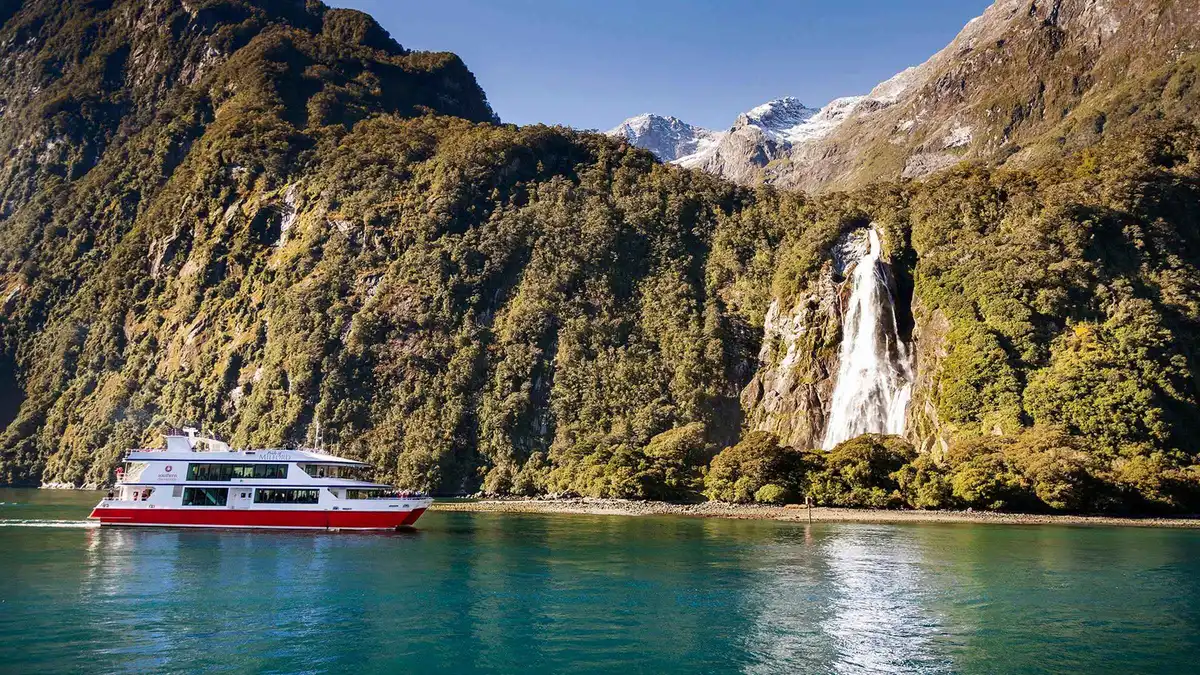 from $168.57
From Queenstown Milford Sound Cruise & Glass-Roof Coach Tour
The coach-and-cruise standard: a glass-roofed bus down the Milford Road and a 1 hour 45 minute cruise, 12.5 hours door to door. You board at the InterCity stop yourself, and lunch is an add-on rather than included.
Check Availability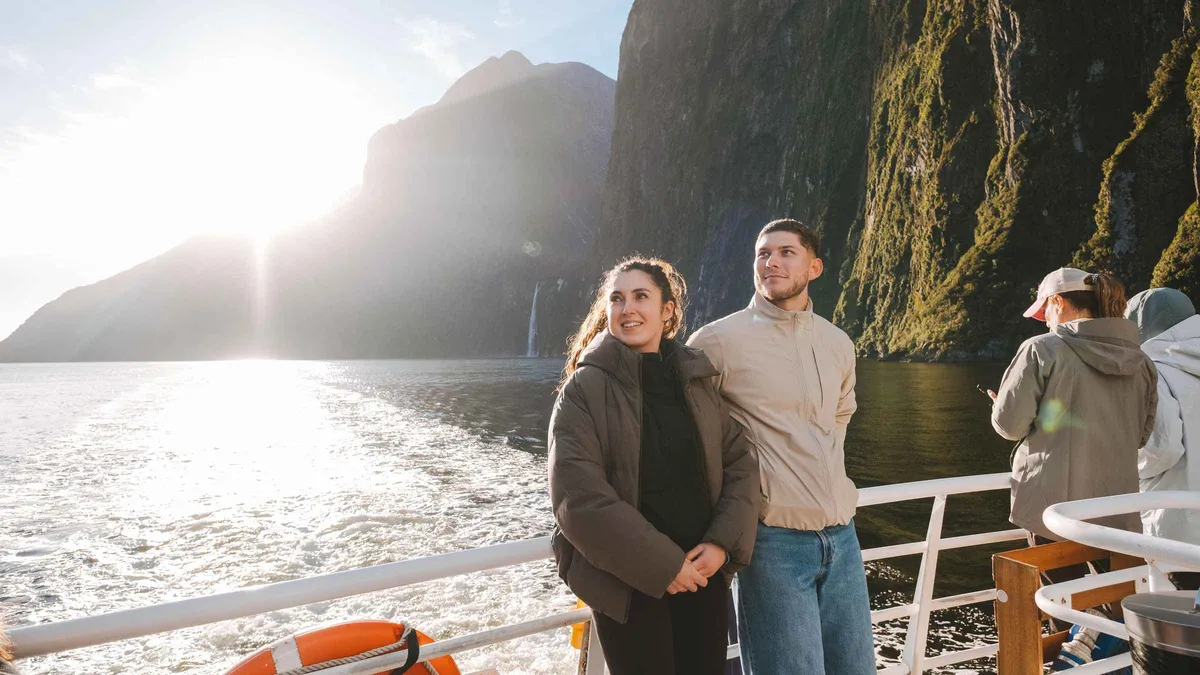 from $220.73
Milford Sound: Premium Small Group Tour from Queenstown
Capped at 15 people in a Mercedes touring van, with hotel pickup and a packed picnic lunch already covered. It is the longest day of the five at 13 hours, and the one that trades a full-size bus for legroom.
Check Availability from $438.41
Shortest day
from $438.41
Shortest day
From Queenstown: Milford Sound Full-Day Trip by Plane & Boat
Flies both ways, so the whole thing fits into five hours instead of twelve, and the cruise on the fiord runs a full two hours. Every seat is a window seat, which is the point of paying to skip the road.
Check Availability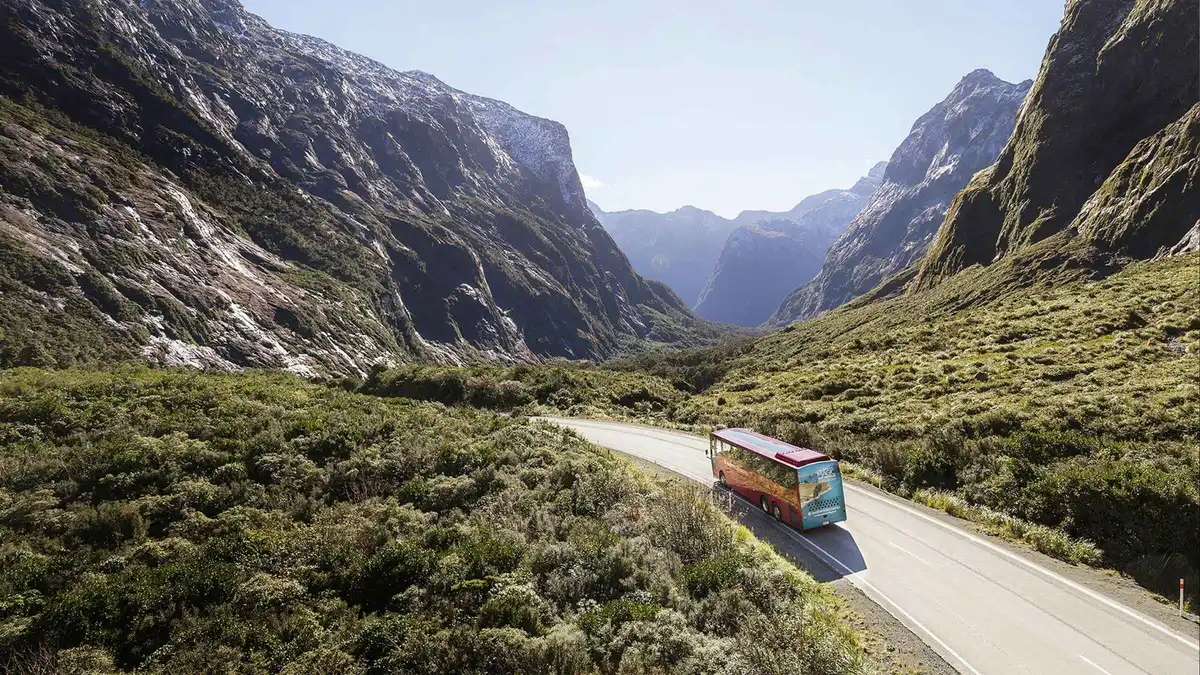 from $520.36
From Queenstown: Milford Sound Coach, Cruise, Scenic Flight
Coach one way, scenic flight the other: the Milford Road on the way in, Fiordland from the air on the way back, in nine hours rather than twelve. A buffet lunch and a guaranteed window seat are included.
Check AvailabilityPrices, ratings and details are the platform's own. Dollar figures are the listed prices. The platform bills in your account's currency.
How Long the Milford Day Actually Takes
Three routings, three completely different days out of the same town. The hours below are the operators' own published figures for the tours on this page, set against the Department of Conservation's road statement of 600 km and 12 to 14 hours return.
Almost every argument about Milford Sound is really an argument about the road. The fiord is 15 km long and the cruise portion is fixed at somewhere between 90 minutes and two hours whatever you pay. What changes is the wrapper: ten hours of coach, ninety minutes of flying, or one of each.
Read the table by the last column, which is the part nobody tells you until you are already in the seat.
| Routing | Door to door | Time on the water | What it skips | Price |
|---|---|---|---|---|
| Coach, cruise, coach | 12 to 12 hours 30 minutes | 1 hour 45 minutes | Nothing on the road: Mirror Lakes, The Divide, Monkey Creek and the Homer Tunnel all get their stop | $137.55 to $168.57, or from $170.50 (NZ$292) direct |
| Fly, cruise, fly | 5 hours | 2 hours | The entire Milford Road, and with it the reason the drive has a reputation of its own | $438.41, or NZ$730 direct with RealNZ, about $426.30 |
| Coach, cruise, scenic flight home | 9 hours | Up to 2 hours | The return leg only: you see the road once, in the morning, when it is at its best | $520.36 |
Which of the three we would book
The coach, cruise and flight home. It removes the leg that ruins the day, which is the five hours back to Queenstown in the dark with the fiord already three hours behind you, and it keeps the leg worth having. It is also the only one of the three that shows you Fiordland twice, from underneath and from above.
If the budget will not stretch, take the earliest coach you can get, not the latest. Departures run from 6:45 am, and the morning sailings put you on the fiord before the mid-afternoon convoy of buses arrives. If the budget is not the constraint but the calendar is, fly both ways and give the other eight hours to something on the lake or a walk above town.
The Te Anau question, which the Department of Conservation answers for you
The Department of Conservation does not hedge on this. It states the Queenstown return at 600 km and 12 to 14 hours and then recommends planning the return trip from Te Anau instead: 240 km, and an eight-hour day that has room for the stops, the short walks and a cruise. Te Anau to Milford one way is 120 km, about two hours without stopping.
That advice is unusual, and it comes from the agency that manages the road and the park. If you have a spare night in the itinerary, moving it to Te Anau turns a 14-hour endurance day into a normal one. Nobody selling a Queenstown coach seat is going to tell you that, which is exactly why it is on this page.
The Milford Road, the Homer Tunnel and What Closes It
State Highway 94 is the only road in, and it is the piece of infrastructure your booking actually depends on. Every figure below is from the Department of Conservation's driver page for the Milford Road and from the New Zealand Transport Agency's project pages for the tunnel.
Everything in this section comes from the Department of Conservation's Milford Road tips for drivers, which is the page to read before you drive it. The coach route runs down the southern shore of Lake Wakatipu through Garston and Athol to the Waimea Plains, stops at Te Anau for refreshments, then turns north into the park past Mirror Lakes, The Divide and Monkey Creek before the Homer Tunnel. The Divide sits at 532 m and is the lowest crossing of the Southern Alps anywhere in New Zealand, which is worth knowing when you are looking at a saddle that seems unremarkable from a coach window.
The Homer Tunnel is the moment the day turns. It was completed in 1953, sits at 945 m, runs 1.2 km through the Darran Mountains and is about 3.81 m tall, with a steep gradient down towards Milford. It is single lane and controlled by traffic signals, run by the Milford Road Alliance by day and switched to an automatic setting at night. At summer peak the lights can hold traffic for up to 20 minutes.
Nobody publishes the tunnel's light cycle, because there is not one
This is worth stating plainly, because half the internet quotes a number. Neither the transport agency nor the Department of Conservation publishes a fixed light schedule or cycle length for the Homer Tunnel. The signals are managed to demand and run automatically overnight, so a timetable for the tunnel does not exist.
The only published figure is the 20-minute summer delay. Anything more specific you read has been invented.
Avalanche season, and the 17 km where you cannot stop
Avalanche season on the Milford Road is usually June to October. The avalanche area covers 17 km, from Falls Creek above the Hollyford Road junction, 91 km north of Te Anau, to The Chasm on the Milford side of the tunnel. That whole stretch is a Restricted No Stopping Zone. When conditions demand it the Milford Road Alliance either bans stopping in the zone or closes the road entirely and brings the avalanches down with controlled explosives before they come down on their own.
This is the single most common reason a Milford day does not happen, and it is not a rare event. Check the live road status the night before and again at breakfast rather than assuming an open road. A closure is also why the coach operators keep their cancellation terms loose: every tour on this page cancels free up to 24 hours before the start time.
There is no fuel and no shop between Te Anau and Milford
None. Fill the tank in Te Anau. Public toilets exist at Te Anau, Knobs Flat and Milford, and nowhere else on the 120 km. Mobile coverage is limited beyond Te Anau, with a card-phone at Knobs Flat, an emergency satellite phone at the Homer Tunnel and another card-phone at Milford Sound.
In winter, roughly May to September, snow and ice are normal on the road and chains may be required; they are rented in Te Anau. The Department of Conservation advises leaving later, from 9 am, when the traffic has thinned, and then says something no tour operator will: if you are not confident about driving in winter conditions, take a bus. Our getting around page covers the town end of the same problem.
What You Actually See on the Cruise
The cruise is the fixed point of the day, between 90 minutes and two hours on every option here. What follows is what the operators name on their own itineraries and what the fiord's own geography adds.
The fiord runs 15 km inland from the Tasman Sea at Dale Point, and the rock walls on either side rise 1,200 m or more. The Elephant, at 1,517 m, and The Lion, at 1,302 m, are the two peaks the commentary will name after Mitre Peak. RealNZ's cruise itinerary names Lady Bowen Falls at 162 m and Stirling Falls at 146 m, sails past Copper Point, looks for wildlife at Seal Rock, and pushes out towards the Tasman Sea when the weather allows. That last clause is doing real work: on a rough day the boat turns back short of the mouth.
Milford Sound is home to New Zealand fur seals, the southernmost wild population of bottlenose dolphins and Fiordland crested penguins, which breed here. None of that is guaranteed on any single sailing and no operator promises it.
Rain is the feature, not the ruin
Milford Sound receives a mean 6,412 mm of rain a year, which makes it the wettest inhabited place in New Zealand and one of the wettest on earth. Rainfall can reach 250 mm in 24 hours. What that produces is dozens of temporary waterfalls down cliff faces, some of them a thousand metres long, that last a few days after the rain stops. Several never reach the water at all, drifting away in the wind partway down.
So a wet forecast is not a reason to move the booking. A windy one might be. The other thing the rain does is stratify the water: a freshwater layer stained with tannins from the rainforest sits on top of the salt, filters the light, and lets black coral grow as shallow as 10 m, far closer to the surface than it manages anywhere else.
Accessibility, vessel by vessel
This is published, unusually clearly, and it varies by boat. RealNZ names the Milford Haven and the Sovereign as the two vessels with the best wheelchair accommodation, both with ramps and accessible bathrooms. Southern Discoveries names the Pride of Milford and the Spirit of Milford, both with ramp entry, and puts accessible toilets at the Milford Sound Visitor Terminal, where every cruise departs.
What is not published: Southern Discoveries states nothing about accessibility on its standard Nature Cruise vessel. If mobility matters, book the named boat rather than the cheapest departure, and say so at the booking stage. Our accessibility page collects what every Queenstown operator publishes in one place.
Driving Yourself: the Arithmetic, and the Car Park Nobody Mentions
The self-drive day looks cheaper until you price the parking and count the hours behind the wheel. Parking figures are the published rates for the Milford Sound car parks.
There is no entry fee for Milford Sound and no booking charge for the fiord. That surprises people who have been told otherwise. The only money the place takes on arrival is car parking, and it is priced to discourage you.
Car parks A and B, beside the walkway to the Visitor Terminal, charge NZ$10 an hour if you enter before 3 pm and NZ$5 an hour after 3 pm, about $5.84 and $2.92. Car park C takes larger vehicles and campervans. Overnight-cruise passengers park in the coach park for NZ$30 from 3:30 pm to 11 am, about $17.52. It is card or debit only, no cash is taken, no receipt is issued, and you need your plate number to pay.
| Where you park | Rate | US dollar | Conditions |
|---|---|---|---|
| Car parks A and B, entering before 3 pm | NZ$10 per hour | about $5.84 | Card only, no cash, no receipt, plate number required |
| Car parks A and B, entering after 3 pm | NZ$5 per hour | about $2.92 | Same terms, half the daytime rate |
| Coach park, overnight cruise passengers | NZ$30 | about $17.52 | 3:30 pm to 11 am only |
| Deepwater Basin | Free | Free | Limited, first come first served, a 25 to 32 minute walk to the terminal |
Build 45 minutes into the plan before the boat
Cruise check-in is 20 minutes before departure. Milford Sound Tourism advises allowing up to 45 minutes for parking plus a 15-minute walk to the Visitor Terminal. That is an hour of buffer on top of a five-hour drive that has already had a Homer Tunnel light in it. Arriving at the car park at the check-in time means missing the boat.
The free Deepwater Basin option is genuinely free and genuinely inconvenient: the two official pages quote the walk as 25 minutes on one and 32 minutes on the other, and the spaces run out. If you are driving, price two hours of paid parking into the day and treat the free option as luck rather than plan.
So does driving actually save money?
For one person, no. A coach seat with hotel pickup and lunch starts at $137.55, and a self-drive day is 600 km of fuel, two hours of parking, and 10 to 12 hours of your own driving on a road that closes for avalanche control. For a family of four it flips, and it flips hard, because the coach fare is per person and the car is not. That is the real dividing line, and it is worth doing the sum before booking four seats.
The hidden cost is attention. You cannot look at The Divide, Monkey Creek or the Cleddau valley and drive at the same time, and the drive is the part everybody remembers. Our cost of a Queenstown trip page prices the rest of the day around it.
Weather, Cancellations and What the Operators Will and Will Not Promise
A negative finding first, because it matters more than any figure on this page: no operator running a Milford day trip from Queenstown publishes a weather-cancellation cutoff, a wind speed, or a threshold at which the cruise turns back.
What is published is thinner than travellers assume. The scenic-flight operators come closest: on the fly-cruise-fly day, guests are asked to call one hour and 15 minutes before departure for the weather decision, which is the only concrete weather protocol anyone prints. The coach operators publish nothing equivalent. Their listings say the tour runs in rain, which is true and slightly beside the point.
What you actually have is the cancellation window. Every tour on this page cancels free up to 24 hours before the start time, which is the platform's protection rather than the weather's. Twenty-four hours is not enough notice to know whether an avalanche closure will happen, so treat a marginal forecast as a reason to book a flexible fare rather than to wait.
What stops each version of the day
The coach day is stopped by the road: an avalanche closure between June and October, or snow and ice in winter. The flight days are stopped by cloud and wind in the mountain passes, which is a far more frequent event than a road closure and a far shorter one, often clearing within hours. The cruise itself almost never cancels; in heavy weather it shortens, turning back before the Tasman Sea rather than running the mouth of the fiord.
The practical rule that falls out of that: if you have only one possible date, book the coach. If you have two or three, the flight days are worth the risk and the operator will rebook you. Our rainy day page has the fallbacks if the whole thing falls over.
Milford Sound in Ten Dates
How a fiord that ships sailed past for two centuries became the reason people fly to Queenstown.
-
c. 1812
A sealer finds the entrance
Captain John Grono enters the fiord and names it Milford Haven after his home in Wales. Earlier navigators, James Cook among them, had sailed past: the entrance is narrow, and the fear was that the wind inside would not let a sailing ship out again.
-
1823
The date the record disagrees with itself
The same encyclopaedic source that gives c. 1812 in its history section gives 1823 in its etymology section for Grono's naming. We print both rather than pick one. Captain John Lort Stokes later renamed Milford Haven as Milford Sound, though it is a fiord, not a sound.
-
1848
Misnamed in a deed of sale
In the deed of sale to the New Zealand Company the fiord is recorded as Whakatipu Waiti, an error corrected in the Southland purchase deed to Piopiotahi, the name it carries in te reo Maori after the extinct piopio bird.
-
1888
The pass that made the walk
McKinnon Pass is found, and with it the line of the Milford Track. In the same year surveyors identify the low saddle between the Hollyford and the Cleddau, which sixty years later becomes the site of the Homer Tunnel.
-
1889
The Milford Track opens
Quintin McKinnon and Donald Sutherland open the route from Lake Te Anau to Milford Sound. A 1908 article in the London Spectator calls it the finest walk in the world, and the phrase has been attached to it ever since.
-
1904
The reserve
Ten thousand square kilometres of Fiordland are set aside as a national reserve, following proposals by Thomas Mackenzie, later Prime Minister, and John Hay, the Southland Commissioner of Crown Lands.
-
1953
The Homer Tunnel opens the road
The 1.2 km tunnel at 945 m is completed and State Highway 94 reaches Milford Sound. Everything on this page, including the 12 to 14 hour day, descends from that one piece of engineering.
-
1990
World Heritage
Te Wahipounamu is inscribed on the World Heritage List, 26,000 square kilometres across four national parks, Fiordland among them, listed partly for holding the best surviving representation of the flora and fauna of Gondwana.
-
1998
The dual name
The Ngai Tahu Claims Settlement Act gives the fiord the official name Milford Sound / Piopiotahi, one of roughly 90 dual names created by the settlement. The two halves are a single name, not alternatives.
-
2008 onward
The most visited remote place in the country
A TripAdvisor Travelers' Choice survey names it the world's top travel destination. It now takes between 550,000 and one million visitors a year, while the 2006 census counted 120 residents, almost all of them working in tourism or conservation.
Sources: the Department of Conservation's Fiordland National Park and Milford Road pages, the New Zealand Transport Agency's SH94 project pages, and the Wikipedia articles on Milford Sound, the Homer Tunnel, Fiordland National Park and Te Wahipounamu.
Milford Day Trip: What to Do and What Not to Bother With
Six decisions you make the morning you book, and six you can stop worrying about.
Do
- Take the earliest departure on offer. The coaches leave from 6:45 am and the early sailings are on the fiord before the afternoon convoy.
- Check the live State Highway 94 status the night before and again at breakfast, because avalanche control closes the road without notice from June to October.
- Book a fare that cancels free up to 24 hours ahead, which every option in the table above does.
- If you are driving, budget 45 minutes for parking and the 15-minute walk on top of the 20-minute cruise check-in.
- If mobility is a factor, book a named accessible vessel rather than the cheapest departure, and tell the operator when you book.
- Fill the tank in Te Anau if you are self-driving; there is no fuel for the next 120 km.
Don't
- Do not move the booking because rain is forecast. Rain is what fills the temporary waterfalls, and the boats sail in it.
- Do not plan on mobile coverage past Te Anau. Download the map and tell somebody your plan before you leave.
- Do not count on the free Deepwater Basin car park. It is limited, first come first served, and 25 to 32 minutes' walk from the terminal.
- Do not attempt the drive in winter if you are not confident on snow and ice, which is the Department of Conservation's own advice, not ours.
- Do not stop in the 17 km avalanche zone between Falls Creek and The Chasm. It is a Restricted No Stopping Zone, signposted as one.
- Do not build the day around a specific tunnel wait. There is no published light cycle, only a 20-minute summer peak figure.
The road facts here are from the Department of Conservation's Milford Road tips for drivers page.
Five Things Most Visitors Do Not Know About the Milford Day
Each of these came out of an official page rather than a brochure, and each carries its source in brackets.
The evidence layer of this page. If a claim below matters to your booking, the bracket tells you whose page to read.
- The agency that manages the road recommends you do not do this trip from Queenstown at all, and plan the return from Te Anau instead, where it becomes a 240 km, eight-hour day. (Department of Conservation, Milford Road tips for drivers)
- There is no entry fee and no booking charge for Milford Sound itself. Every charge you pay is an operator's or a car park's. (Milford Sound Tourism travel tips; the car-parking page)
- The Divide, the unremarkable saddle the coach crosses without comment, is at 532 m the lowest crossing of the Southern Alps anywhere in New Zealand. (Department of Conservation)
- Neither RealNZ nor Southern Discoveries publishes a child fare or a child age band for any Milford day trip. Both show one adult from-price, and the family arithmetic only appears at the date step of the booking. (realnz.com and southerndiscoveries.co.nz experience pages)
- Milford Sound gets a mean 6,412 mm of rain a year, making it the wettest inhabited place in New Zealand, and up to 250 mm can fall in a single day. The waterfalls people photograph are mostly temporary and last a few days after the rain stops. (Wikipedia, Milford Sound, climate section)
Milford Sound Day Trip Map: the Road, the Stops and the Terminal
The route from Queenstown down to Te Anau and north through the Homer Tunnel, with the four points that decide the day. Pin coordinates are approximate, taken from the official place pages.
Coordinates for Milford Sound, the Homer Tunnel and Queenstown are from the official place pages in our facts pack; The Divide and Te Anau are approximate.
What Else Fits Around a Milford Day
The Milford day eats a whole day, so the question is what goes either side of it. Drive times are the official figures where one exists.
Doubtful Sound
The other fiord, reached by boat and coach because there is no road in. It is longer, deeper and quieter, and it costs more for a reason RealNZ states outright. If you are choosing between the two, the Doubtful Sound page sets out the three legs and the 12 to 13 hour day.
2.5 to 3 hours' drive to the departure point at ManapouriTSS Earnslaw and Walter Peak
The obvious counterweight to a 12-hour coach day: a 1912 coal-fired steamer, 90 minutes on the lake, back before lunch. Good for the day after Milford when nobody wants to sit down again. The cruise and farm options start with the cruise-only sailing.
Five minutes' walk from central Queenstown to Steamer WharfDay trips from Queenstown
Glenorchy, Arrowtown, Wanaka, Mount Cook and Cardrona all take less of the day than Milford does. The day trips hub puts the drive times and the costs on one table so you can see what a Milford day is displacing.
The hub that compares every destinationMilford Sound Day Trip Questions
Is Milford Sound worth the trip from Queenstown?
For most people, yes, but not in the form they imagine. The Department of Conservation puts the return road day at 600 km and 12 to 14 hours, and that is ten hours seated for roughly two on the water. If you take the coach and cruise day with hotel pickup knowing that ratio, it is worth it. If a ten-hour coach day sounds intolerable, the honest answer is to fly one or both legs, or to move the trip to Te Anau, which is what the Department of Conservation itself recommends.
Can I do Milford Sound from Queenstown in one day?
Yes, and hundreds of people do it every morning. The coach options run 12 to 12 hours 30 minutes door to door, leaving central Queenstown between 6:45 and 7:35 am. Flying both ways shortens the whole thing to about five hours, with 30 to 40 minutes of flying each way and a two-hour cruise in the middle. The one thing that stops it is the road: State Highway 94 closes without notice for avalanche control, most often between June and October.
How much does a Milford Sound day trip from Queenstown cost?
The platform listings on this page run from $137.55 for the coach and cruise day to $520.36 for the coach in, flight home routing. Booked direct, RealNZ's coach day starts at $170.50 (NZ$292) and its fly-cruise-fly at about $426.30 (NZ$730), while Southern Discoveries' coach and nature cruise starts at $121.00 (NZ$207.20). Neither operator publishes a child fare on a public page. Our Queenstown cost page prices the rest of the trip around it.
Do I need to pay to enter Milford Sound?
No. There is no entry fee and no booking charge for Milford Sound or for Fiordland National Park. The only money taken on arrival is car parking: NZ$10 an hour entering before 3 pm, about $5.84, and NZ$5 an hour after 3 pm, card only, with your plate number. Free parking exists at Deepwater Basin but it is limited and a 25 to 32 minute walk from the terminal. On any coach or flight option the question does not arise, because you are not parking.
What happens if it rains on the Milford Sound cruise?
It sails. Milford Sound gets a mean 6,412 mm of rain a year and is the wettest inhabited place in New Zealand, and heavy rain is what produces the temporary waterfalls down the cliffs, some of them a thousand metres long. What genuinely disrupts the day is wind, which can shorten the cruise before the mouth of the fiord, and snow or avalanche control on the road. No operator publishes a weather-cancellation cutoff, so book a fare that cancels free up to 24 hours ahead, as every option in the comparison table does.
Should I drive to Milford Sound myself or take a coach?
For one or two people, take the coach: it is 600 km of driving to save very little, and you cannot look at the road and drive it at the same time. For a family of four the fuel and parking beat four coach fares, and the flexibility is worth something. If you do drive, the parking and timing section has the rates and the 45-minute buffer you need before check-in, and the Department of Conservation's own advice for winter is blunt: if you are not confident about driving in winter conditions, take a bus.
Which Milford Sound cruise from Queenstown is best for a short trip?
The fly-cruise-fly day if the budget allows: five hours in total, a guaranteed window seat, a two-hour cruise, and eight hours of your day handed back. It is rated 4.9 from 1,819 reviews, the highest on this page. The next best compromise is the coach out and scenic flight home at nine hours, which shows you the Milford Road once, in morning light, and Fiordland from the air on the way back.
Where the Milford Day Fits in a Queenstown Trip
A short routing note, because this is the one booking that dictates the shape of everything else.
Put Milford on day two or three, never day one. It leaves before dawn and returns after dark, and doing it jet-lagged is how people end up asleep for the drive that is half the point. Keep the day after it light: something on the lake, a walk, an afternoon rather than another early start. Our three-day itinerary places it with that in mind.
Do not stack Milford and the other fiord back to back. Both are 12-hour-plus days from Queenstown and they are far more similar in shape than in scenery. If you want both, put a day between them, and read the Doubtful Sound page first, because the choice usually resolves itself once you see how the three legs work.
One more scheduling point. Every version of this day depends on a road or a runway, and both are weather-exposed. If your Queenstown stay is three nights or fewer, book Milford on the first available date rather than the last, so a cancellation still leaves you a second attempt. The tours hub has the rest of the catalogue if the weather takes the fiord off the table entirely.
The Milford Sound Day Trip on Film
Three run-throughs of the same day by people who took it, useful for judging the coach hours before you commit to them.
Queenstown to Milford Sound Day Trip: What MOST Travellers Regret
The case against the long coach version, made by somebody who did it.
Video: Virtual Journeys with Michael NeesMilford Sound Day Tour from Queenstown, Fiordland National Park with GreatSights
A full 4K run of the coach and cruise day, stop by stop down the Milford Road.
Video: AusFlyerMilford Sound Day Tour: Epic Cruise and Scenic Stops from Queenstown
What the photo stops and the cruise itself actually look like on an average day.
Video: The BeachpackersVideos load from YouTube only when you press play.
Prices, hours and terms are set by the venue or operator and confirmed at checkout.
We may earn a commission if you book through one of our links, at no extra cost to you. Full affiliate disclosure